
Stage VI · Apply
Scholarships, applications and academic life: Francisco Olivero's experience in political science at NYU
Francisco Olivero · 22 August 2026
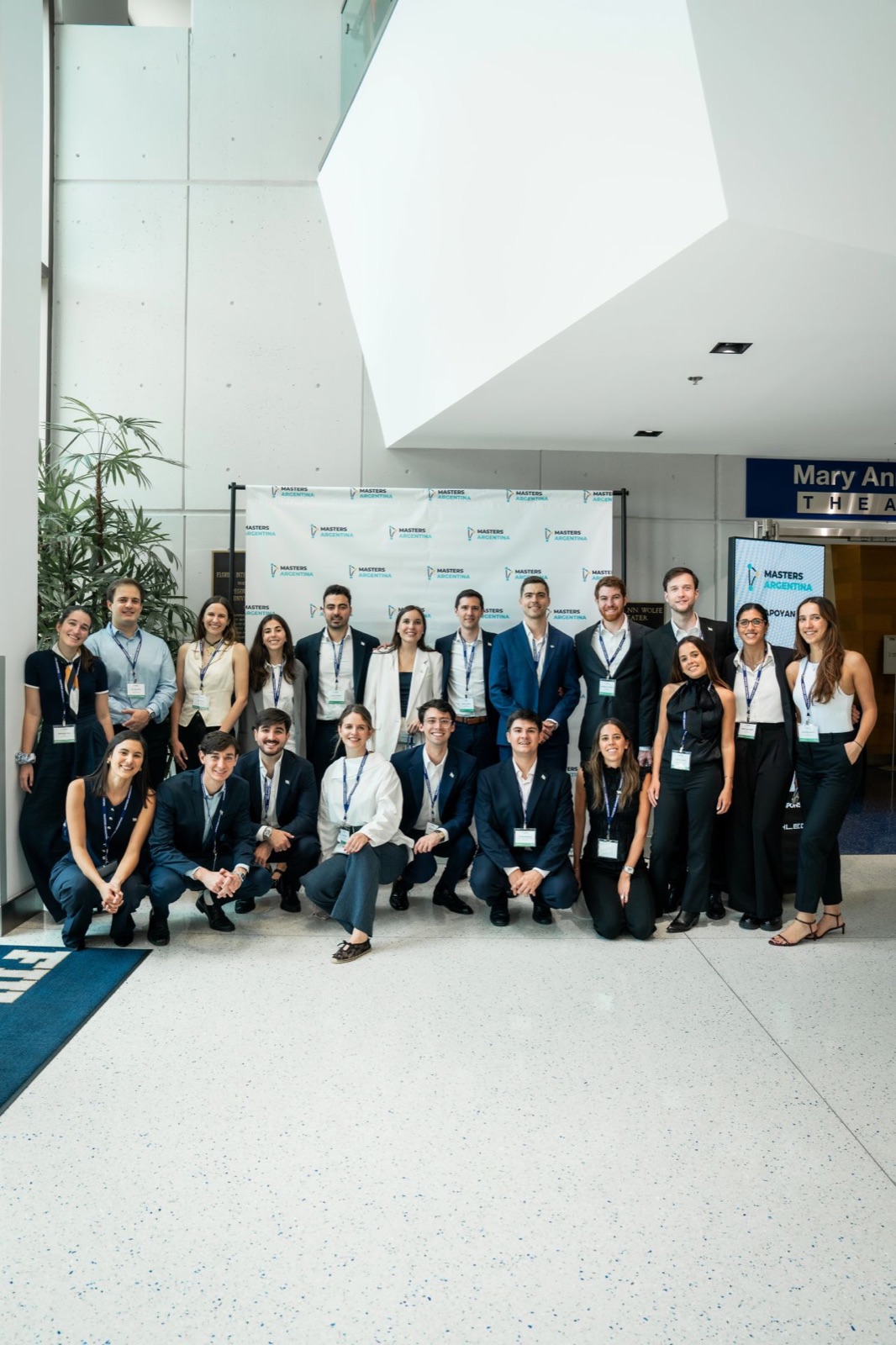
He moved from Villa María to Buenos Aires at 18 with a scholarship to study at Universidad Torcuato Di Tella, where he qualified as a political scientist and then did a master's in applied economics. Years later he applied to graduate programs in the United States and ended up choosing NYU, both for its political economy focus and for the funding he secured after negotiating the university's initial offer.
Francisco Olivero is 25 and is doing the master's in political science at New York University, where he specializes in political economy. Before arriving in New York he studied at both undergraduate and graduate level at Di Tella, worked in political consulting and built up experience in teaching and research, partly with a future academic application in the United States in mind.
From Villa María to Di Tella
Francisco was born in Córdoba Capital but lived in Villa María from a very young age and, when he finished secondary school, his first option was to move to the city of Córdoba to study. The interest in social sciences came from earlier on, and choosing a degree wasn't particularly hard.
“It was pretty simple because I liked social sciences from a very young age. As a little kid I said I was going to be a historian, then that I was going to be a politician, then that I was going to be a diplomat. I always went in that direction.”
What changed was the place. On the recommendation of a friend of his mother's he found out about Universidad Torcuato Di Tella, looked into its scholarship programs and decided to apply. He got funding and at 18 he moved to Buenos Aires.
“I was going to go study in the city of Córdoba, which is the natural route all the kids from the interior of Córdoba take. But because of advice from a friend of my mother's, who told me to look at Di Tella, I looked, I applied for a scholarship, they gave me one and I went.”
Between 2019 and 2022 he did the degree in political science and government, with a minor in government and an average of 9.31 out of 10. He then continued at the same university with the master's in applied economics, which he did between 2023 and 2024 and finished with an average of 9.69.
His thesis, Social capital, trust and crime: evidence from the War on Drugs in Mexico, combined political sociology questions with econometric tools. That intersection between politics and quantitative methods also ended up being one of the criteria he would later use to assess graduate programs in the United States.
Preparing an application with time to spare
The possibility of studying abroad came up while he was still an undergraduate, out of conversations with professors he worked with at Di Tella.
“Working with a professor at Di Tella, as his assistant, he recommended that if I wanted to devote myself to studying politics, one of the things I had to do was gain the power to abstract. And one of the ways is to go study abroad. They had a lot of contact with professors in the United States.”
From then on he combined professional and academic experience. In the private sector he worked as a political analyst at Poliarquía Consultores and then as an associate consultant at Elysium Consultores, building up around three years of experience in political consulting, public opinion, polling and campaigns.
In parallel he kept working inside the university. He was a teaching assistant in Di Tella's departments of Political Science and International Studies and of Historical and Social Studies, and a research assistant to Andrés Gago, a doctor in economics specializing in behavioral economics, and to Alison Post, a political science professor at the University of California, Berkeley specializing in urban politics and infrastructure in Latin America.
Part of that strategy had directly to do with future applications. Francisco knew letters of recommendation would carry weight in an academic application and he looked to work long enough with professors who could later write about his performance based on concrete experiences.
“One of the things I focused on was trying to devote part of my CV to having good letters of recommendation.”
For him, the difference isn't only in the position or prestige of the person recommending you, but in how well they actually know the candidate's work.
“It's not only who writes the letter for you, but what they can say about you. Investing time in getting a good letter, so the person who's going to write it knows you, knows details about you, knows what you're good at, what you can improve and why you'd be a good match for the university you're applying to. For me it's one of the most important things in the application process.”
In practice, a letter like that requires having worked with the person writing it beforehand and giving them concrete material to assess the applicant's academic or professional profile. In Francisco's case, that preparation started several years before he sent the applications.
The applications and choosing NYU
Francisco submitted applications to around thirteen US universities and received admission offers from all of them. Among the options he considered were Columbia, Duke and NYU, but the final decision came down mainly to two factors: the funding and the program's academic focus.
“First because of the scholarship question. Second because it was a program that combined what interested me, economics and politics, which formally is called political economy, and NYU is fairly well known for that.”
He ended up choosing the master's in political science at NYU's Department of Politics. The program has 36 credits spread over four semesters and includes an internship seminar, a thesis seminar and a final thesis of between 10,000 and 15,000 words. Students also choose a field of specialization, and Francisco went with political economy.
Negotiating the funding offer
A less known part of the process happened after the admissions came in. Francisco had offers from Columbia and NYU with different financial terms and, before making a decision, he asked for meetings with the people in charge of both programs to ask whether there was room to change the funding.
“Something very common here in the United States is that they're very used to negotiating. In Argentina maybe we don't have that as present.”
For about a month he kept up conversations with both universities and used the offers he already had as a reference for framing his decision.
“I sat down and started telling them: okay, I have these two offers. Columbia is offering me this, you're offering me this, I like your program better. And I told Columbia: I like NYU's program better, but you're offering me more. It was about a month of negotiations, of asking for Zooms.”
NYU ended up increasing the amount of its initial scholarship and Francisco chose that program. His recommendation for other applicants is not to assume a university's first financial proposal is necessarily final, especially when there are comparable offers from other institutions.
“To a lot of kids who ask me how to do it, I recommend this: always try to have two or three options, and don't be afraid, ask for meetings to negotiate. Here it's common. And if you push, you can get a bit more.”
At many US universities, the response deadlines leave a few weeks between receiving the admissions and the date the candidate has to commit to an institution. For those who get more than one offer, that period can also serve to talk with the programs about funding before making the final decision.
origin
Villa María, Córdoba
destination
New York
institution
New York University
In Francisco's case, the scholarship ended up covering NYU's tuition, while living expenses in New York are on him.
Working during the master's
Besides studying, Francisco works inside NYU as a teaching assistant in the Department of Applied Statistics for Social Science and Humanities, where he teaches undergraduate students.
“Yes, you can. In fact, I've been working since I arrived in what in Argentina would be a teaching assistant role, teaching classes for undergrad kids here. And then there are loads of other positions, from working at the gym to being an administrator or a research assistant.”
For an international student on F-1 status, working on campus is allowed under certain conditions and, during term time, it normally has a limit of 20 hours a week. That includes academic positions, such as teaching or research assistantships, but also different administrative and service jobs inside the university.
In his case, the weekly split combines three days taking his own courses with another two spent teaching.
What he recommends for preparing an application
When we asked what he would recommend to someone who is considering studying abroad, Francisco puts the emphasis on starting to prepare the application well in advance, especially because some of its pieces can't be built in a few months.
“Set a date, a three or four year project that says: I want to study abroad, wherever it is.”
One of the tools he used was looking through the profiles of students already in the programs he was interested in. He was looking specifically for Argentines, going over their academic and professional records and, when he could, writing to them to ask about the experience and the admission process.
“I'd go into the universities' pages, to the list of current students, and look for whether there were Argentines. If there were Argentines I'd send them emails. And I'd look them up on LinkedIn to see what CV, what degree the person who's where I want to be tomorrow had.”
It wasn't about reproducing those paths exactly, but about understanding what backgrounds people who had reached similar programs tended to have and what preparation steps he could start working on from Argentina.
“Everyone has their own road and it's complicated because it isn't written down, it isn't marked out. But there's someone who has walked a similar path, and you have to try to imitate them.”
He also recommends not concentrating all the preparation in the months right before applications close. Letters of recommendation, contact with professors, language exams and choosing universities usually take more time.
“If they plan to start six months before applications close, it can be done, but it's very complicated. If they do it with time they arrive well prepared, with good letters, they can invest time in making contact with professors, in talking to the universities, in preparing for the exams, in studying English, not only to pass the exam but to arrive ready to study here.”
Living and studying in New York
The move also meant adapting to a university and a city with a far more international community than the one he had known during his training in Argentina.
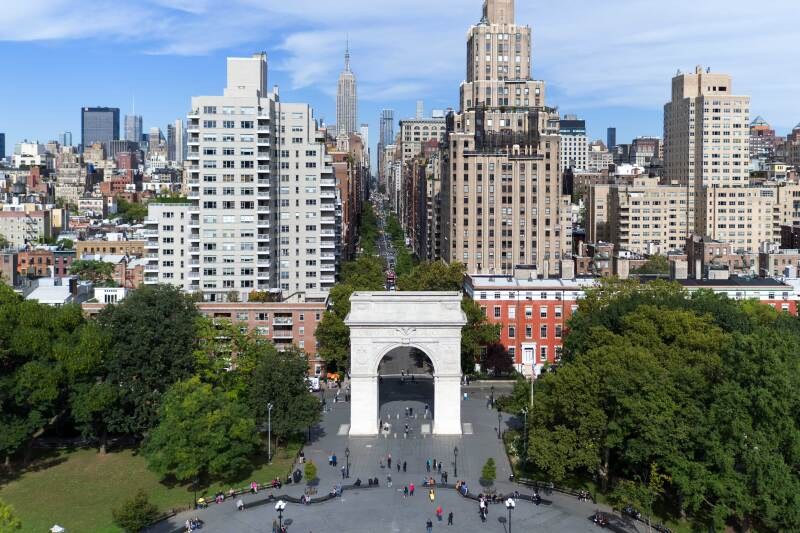
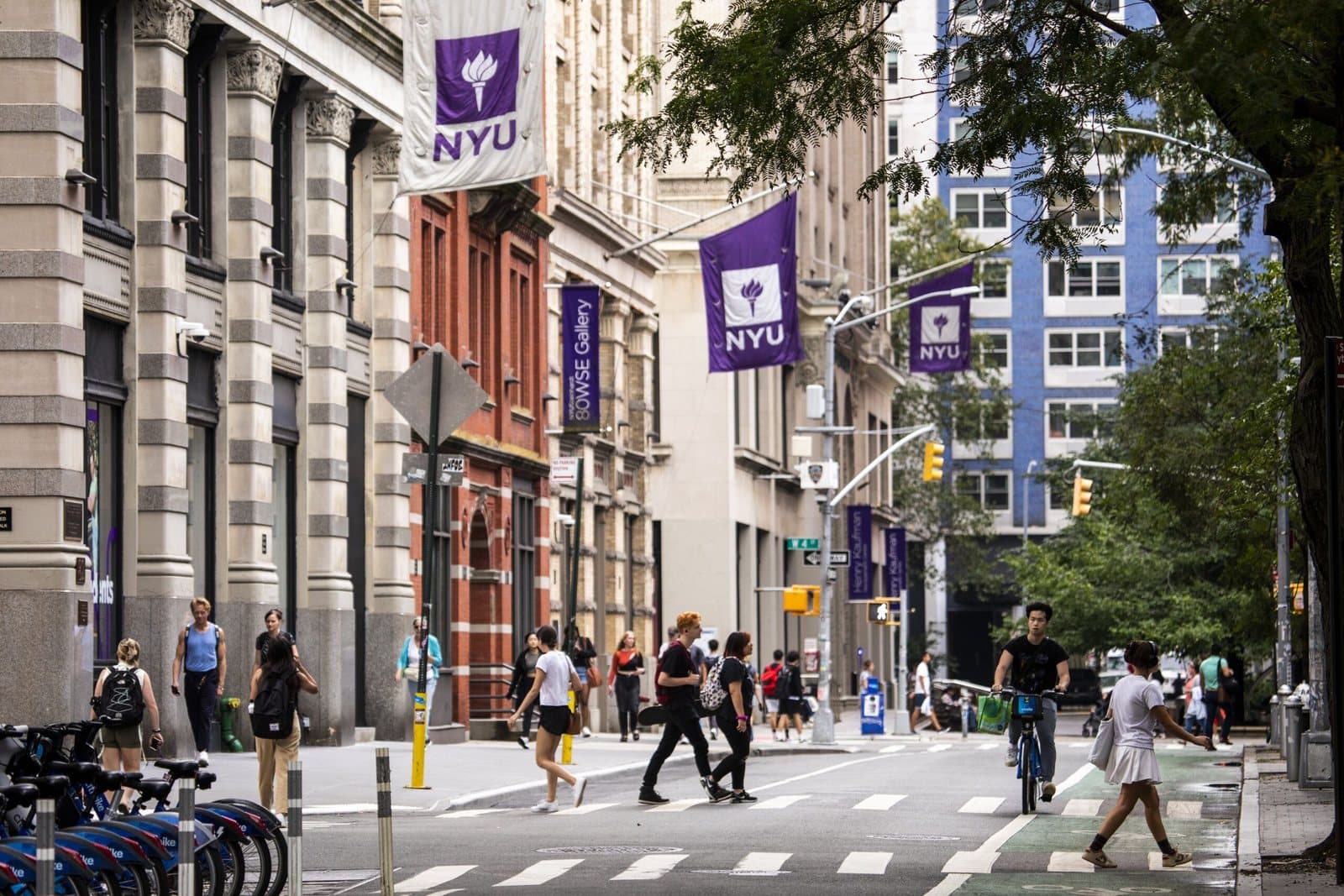
“Living in New York was a cultural shock. It's like a small model of the world: here you have people from everywhere, your classmates are from different parts of the world, you learn from them. I try to spend a lot of time at the university to learn from the people around me too.”
For Francisco, that intensity has positive sides and harder ones. He describes New York as a setting where the professional and academic activity of the people around him generates motivation, but also a certain pressure.
“It gives you adrenaline, it gives you anxiety, you have to know how to control it, but the city carries you along.”
While he studies he also writes ¿Qué quiere la gente?, a weekly Substack and podcast about Argentine politics in which he combines political science, history and economics. His topics include political economy, economic history, public opinion and legislative affairs, plus the use of machine learning tools for political and economic analysis.
For now, his idea is to stay a few more years in the United States and complement his university training with experience in research and political consulting before returning to Argentina.
“I see myself here in the United States for at least another two or three years. I'd like to round out my training beyond formal education, learn from the political consultants and the politicians who are here, see how they bring different technologies into political research. And then I'd like to go back to Argentina, ideally have a consultancy for public opinion, political matters, campaigns. We'll see how it ends up, but that's my plan.”