Stage II · Choose
From UNLP to Columbia University: a path through research, teaching and legal practice
Justina Bruera · 27 August 2026
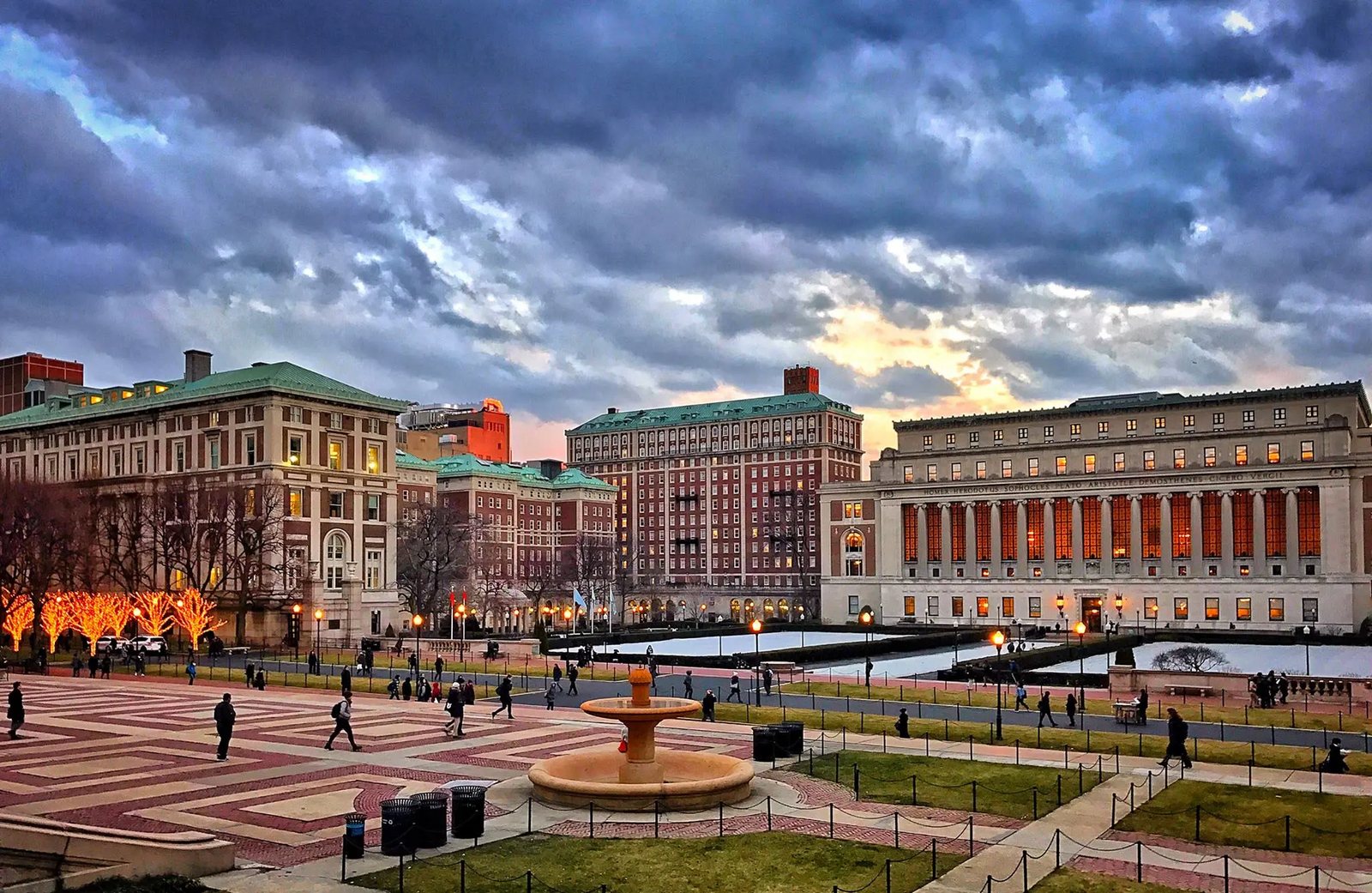
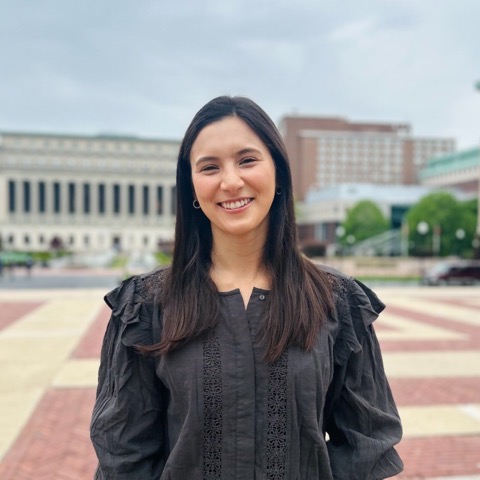
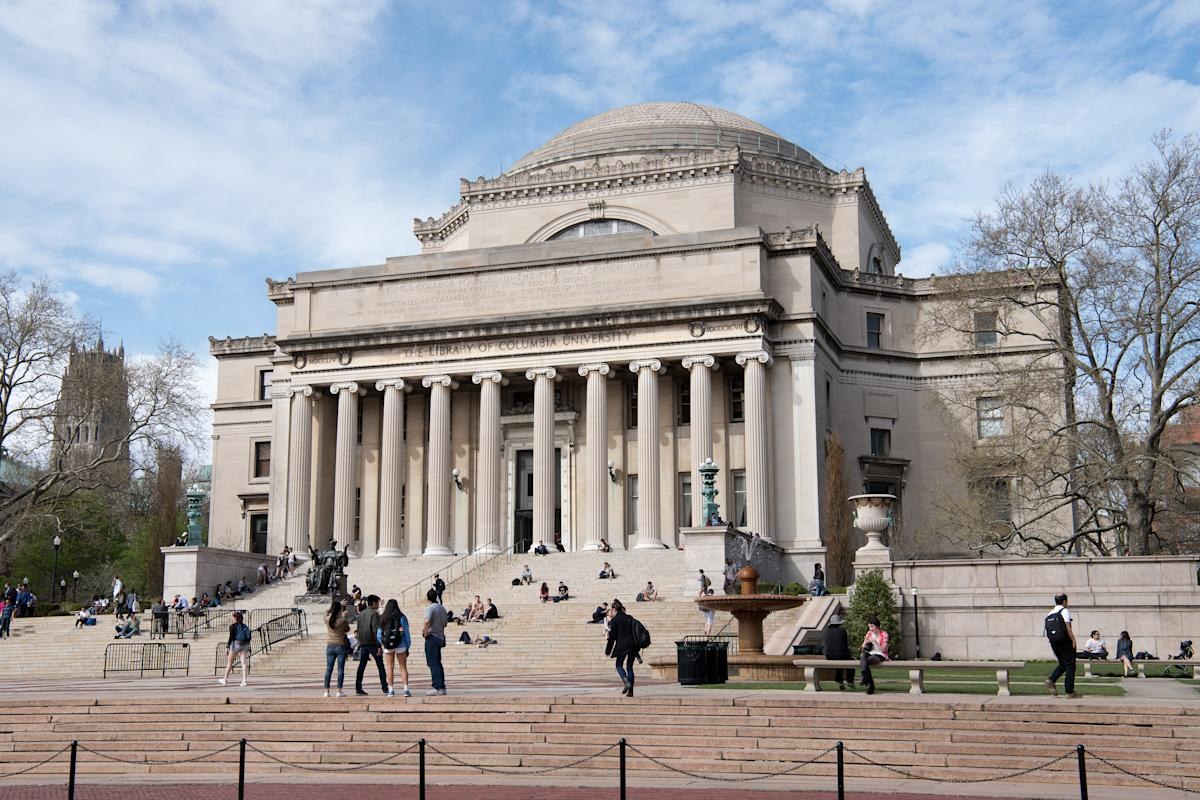
She qualified as a lawyer at the Universidad Nacional de La Plata at 20 and then continued her training in administrative, constitutional and criminal law in Argentina. In 2023 she arrived at Columbia Law School with a Fulbright scholarship to do an LL.M. (master's in law), from which she graduated with honors in 2024, and that same year she was admitted to the J.S.D., Columbia's doctorate in law. Her research looks at how the rules that allow house arrest are applied to incarcerated women who have children in their care.
Justina Bruera studied law and notarial practice at the Facultad de Ciencias Jurídicas y Sociales of the Universidad Nacional de La Plata and finished her law degree in 2017, at 20. Before moving to the United States she kept training in different areas of public and criminal law, and it was that combination of interests that later converged in her doctoral research project.
From La Plata to graduate study
After graduating from UNLP, Justina did a master's in administrative law and a diploma in constitutional law at Universidad Austral, plus a specialization and a master's in criminal law at Universidad Torcuato Di Tella. The route combined areas that are usually studied separately but that appear connected in her later research around a common question: how the state intervenes when an incarcerated person also has caregiving responsibilities.
In 2023 she started the LL.M. at Columbia Law School with a Fulbright scholarship. This kind of program is aimed at lawyers trained outside the United States and, at Columbia, it runs for one academic year with the option of combining courses from different areas of law.
Justina graduated in 2024 with honors, and during that year she also received the Chamberlain Fellowship from Columbia, the World Fellowship from Delta Kappa Gamma Society International and a Commendation for Leadership and Commitment in Human Rights from Columbia Law School's Human Rights Institute.
Beyond the program's coursework, she worked as a research assistant, was a teaching assistant for a professor and took part, as a student, in defending a misdemeanor case before New York courts.
“I was struck by how many opportunities the university gave me during this year, when I was able to work as a research assistant, be a teaching assistant for a professor and even take part as a student in defending a misdemeanor case in the New York courts.”
She also highlighted the international makeup of the cohort and the effect it had on academic discussions. “The diversity of people I met, with classmates from all over the world who enriched the debate. I learned a lot from that exchange.”
From the LL.M. to the doctorate in law
After the LL.M., Justina was admitted to the J.S.D., Doctor of the Science of Law, the most advanced academic degree Columbia Law School offers and a program aimed mainly at people looking to build a career in legal research and teaching.
Its structure is quite different from that of a traditional master's. Students spend most of the program on their doctoral research project and are free to audit courses with the professors' permission, while academic work is assessed against doctoral standards instead of the conventional grading system.
The dissertation can be submitted as one extended piece of research or as a set of three articles tied together by a common essay, and it has to meet a standard Columbia considers equivalent to work publishable in a nationally circulated US law review. The process ends with an oral defense, in person, before a committee of four professors.
Columbia requires one academic year of residence and recommends, though does not require, staying a second year. The full doctorate has to be finished within a maximum of six years, so after the initial residence period it's possible to keep working on the research from somewhere else.
“The doctorate takes between 3 and 6 years, but at Columbia they only require you to be there in person during the first year. After that you can finish it from wherever you want, or you can look for outside funding to stay here.”
Justina's doctoral committee is chaired by Amber Baylor and also includes Clare Huntington and Bernard Harcourt.
How admission to the J.S.D. works
One important feature of the admission process is that the candidate has to secure the support of three Columbia Law School professors before formally submitting the application. One of them acts as the project's supervisor and the other two make up the advisory committee, and all three have to agree to accompany the research and submit letters of recommendation.
That means preparing the application starts well before the formal form. To contact possible supervisors, Columbia recommends sending an introduction letter, a one or two page summary of the project and an explanation of why the research fits specifically with that professor's work.
The school also notes that it gives priority to candidates who are currently doing or have previously completed Columbia's LL.M., though it can also admit graduates from other institutions with strong academic records.
The rest of the application includes a dissertation proposal of around 2,500 words, a writing sample originally produced in English, a personal statement, academic records translated and verified through LSAC and, where applicable, an English exam. Those who already did the LL.M. at Columbia are exempt from that last requirement.
In the most recent published cycle, the application fee was 85 dollars and the deadline was March 15, 2026. Dates change from one cycle to the next, so they have to be checked directly with the university when preparing an application.
Columbia also specifies that it does not accept applications submitted on a candidate's behalf by educational consultancies, other than processes tied to Fulbright and its partner organizations.
How the program is funded
The financial setup of the J.S.D. is different from both the LL.M. and many US PhDs. Columbia's LL.M. is expensive: for 2026-2027, the university estimated a total annual cost of more than 130,000 dollars including tuition and living expenses.
In the J.S.D., by contrast, Columbia waives tuition and mandatory fees during the residence years. That waiver doesn't mean every expense is covered, because funding for housing, food, insurance and other personal costs is more limited.
The school can award a living stipend during the first year based on financial need, but it makes clear that this support doesn't necessarily cover the full cost of living in New York. The request also has to be made at the same time as the admission application.
For that reason, outside scholarships can still play an important role even after getting the tuition waiver. For Argentine students, Fulbright is one possible option and can contribute funding for airfare, medical coverage and living costs for a set period, subject to the conditions of each call.
So the setup isn't the same as a US PhD that guarantees several years of stipend and health insurance. In the J.S.D., tuition may be covered by Columbia, but the student has to work out separately how to fund living costs during the years they stay in the United States.
The doctoral research
Justina's project studies the rules that allow certain incarcerated women to serve their sentence under house arrest when they have children in their care, and analyzes how far those provisions are actually applied in practice. “I think what they valued was how new the topic was.”
origin
La Plata
destination
New York
institution
Columbia Law School
In Argentina, article 32 of Law 24.660 sets out different situations in which a judge can order house arrest. They include pregnant women and mothers of children under five or of people with disabilities in their care.
The rule establishes a possibility, not an automatic application, so the final decision rests with the enforcement judge and the circumstances of each case. That discretion is part of the problem Justina studies, along with the gender differences that run through the criminal justice system and caregiving responsibilities.
Official data gives a sense of the universe she works on. According to SNEEP, at the end of 2024 there were 120,700 people deprived of liberty in Argentina, of whom 5,213 were women. Seventy-five women were living with their children inside prison units.
In the province of Buenos Aires, where Justina trained as a lawyer, there were 2,201 women among more than 55,000 people in detention, and 31 were living with their children in prison. Two of the province's women's prison units are in Los Hornos, near La Plata.
Other data shows significant differences in the offenses and procedural conditions affecting women and men. According to information from the Comité Nacional para la Prevención de la Tortura, drug-related offenses account for a considerably larger share among incarcerated women, while pretrial detention also shows differences by gender.
Justina's doctoral project brings these questions together from criminal law, human rights and gender studies, with particular attention to the consequences of incarceration for women who carry caregiving roles.
Professional and teaching work during the doctorate
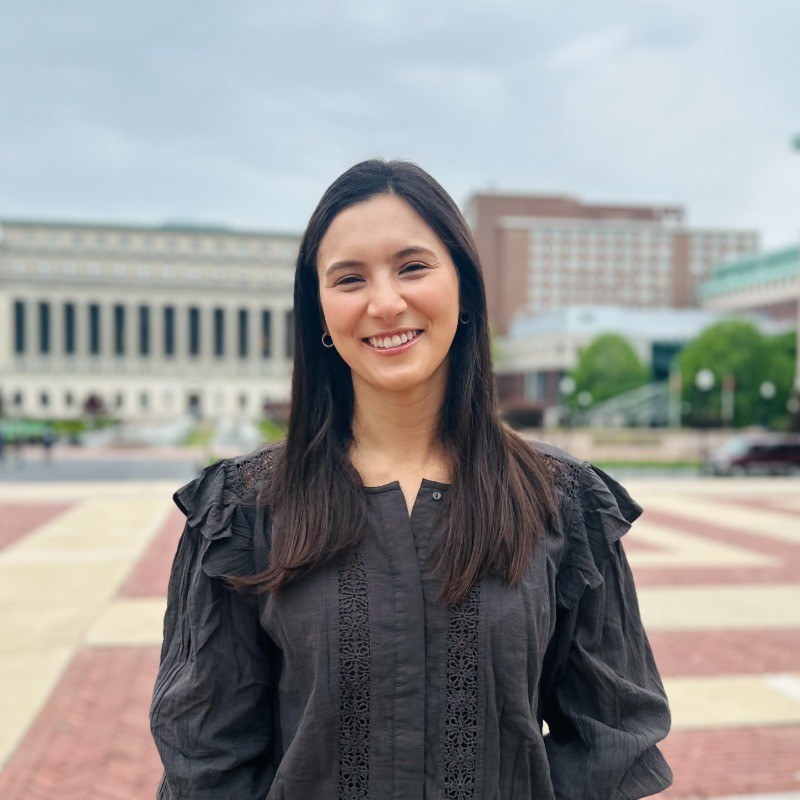
During the J.S.D., Justina also combined research with different professional and teaching experiences. At Columbia, she worked as a research assistant at the Human Rights Institute on the TrialWatch project, run in collaboration with the Clooney Foundation for Justice. She was also a teaching assistant in the Criminal Defense Clinic, where students represent people charged with misdemeanors.
She also spent a summer on a professional visit at the Inter-American Court of Human Rights, as part of a program that gives legal professionals hands-on experience inside the Inter-American System. There she worked alongside the Court's lawyers on research, legal analysis and the handling of different matters, an experience that let her deepen her training in human rights and get closer to the day-to-day work of an international court.
From the third year of the J.S.D., Justina began working as a Teaching Fellow in the Domestic Violence Clinic at Georgetown University Law Center, in Washington D.C. The two-year fellowship combines training in litigation, teaching and legal research. As a Teaching Fellow, she supervises students who represent victims of domestic violence and accompanies them through the different stages of the cases, from the first interviews to preparation and litigation in court.
Beyond clinical supervision, she takes part in designing and teaching classes and receives specific training in legal pedagogy. The fellowship also lets her keep developing her own research and academic writing with support from Georgetown professors and, when the program ends, she'll receive an LL.M. in Advocacy.
Research and public debate
While she works on the doctorate, Justina has also published opinion columns in El Día of La Plata on subjects tied to criminal justice, gender and human rights.
In December 2025 she wrote about the criminalization of obstetric emergencies and looked at cases of women still in detention for events linked to pregnancy and childbirth. In August of that year she took up Advisory Opinion 31/25 of the Inter-American Court of Human Rights on the recognition of care as an autonomous human right and the gender inequalities tied to unpaid care work.
She also wrote about the debate over the age of criminal responsibility in Argentina and questioned the way the public discussion is usually framed, pointing out that the current system already establishes criminal responsibility for certain adolescents.
These topics are closely connected to her doctoral research and show how her academic work fits into broader legal discussions about the Argentine and Latin American criminal justice systems.
Preparing the application by talking to people who have been through it
Before applying to the J.S.D., Justina looked for someone who had already done the same program. In La Plata she met with María Emilia Mamberti, another Argentine lawyer who had been through Columbia's doctorate, to ask her specifically how her application had worked.
“We met last year in La Plata. From that moment I knew I wanted to apply to the doctorate she had already done, to do it once I finished the master's. So we met at a café, near the law school, and she told me what her application had been like. Emilia was very generous, she helped me a lot.”
The conversation helped her understand a process with unusual requirements, especially the need to have three Columbia professors willing to join the committee before sending the application. That kind of information can be found in the formal rules, but talking to someone who has already been through the process helps you understand how long it takes to secure that support and when it makes sense to start contacting professors.
Justina has said that in the future she wants to return to La Plata, teach at the Universidad Nacional de La Plata and share information about scholarships and international training opportunities with other students and lawyers.
This article was written from public sources: Columbia Law School's J.S.D. candidate profile, Columbia's official admission and funding rules, the Fulbright Argentina rules, the 2024 SNEEP reports from the Ministry of Justice and from the Comité Nacional para la Prevención de la Tortura, official information from the Inter-American Court of Human Rights about its Professional Visits Program, official information from Georgetown University Law Center about the Domestic Violence Clinic's Graduate Teaching Fellowship, and articles and columns published in El Día.