
Stage VI · Apply
From lawyer in Argentina to Stanford and tech law: Ramiro Gandur's story
Ramiro Gandur · 19 September 2026
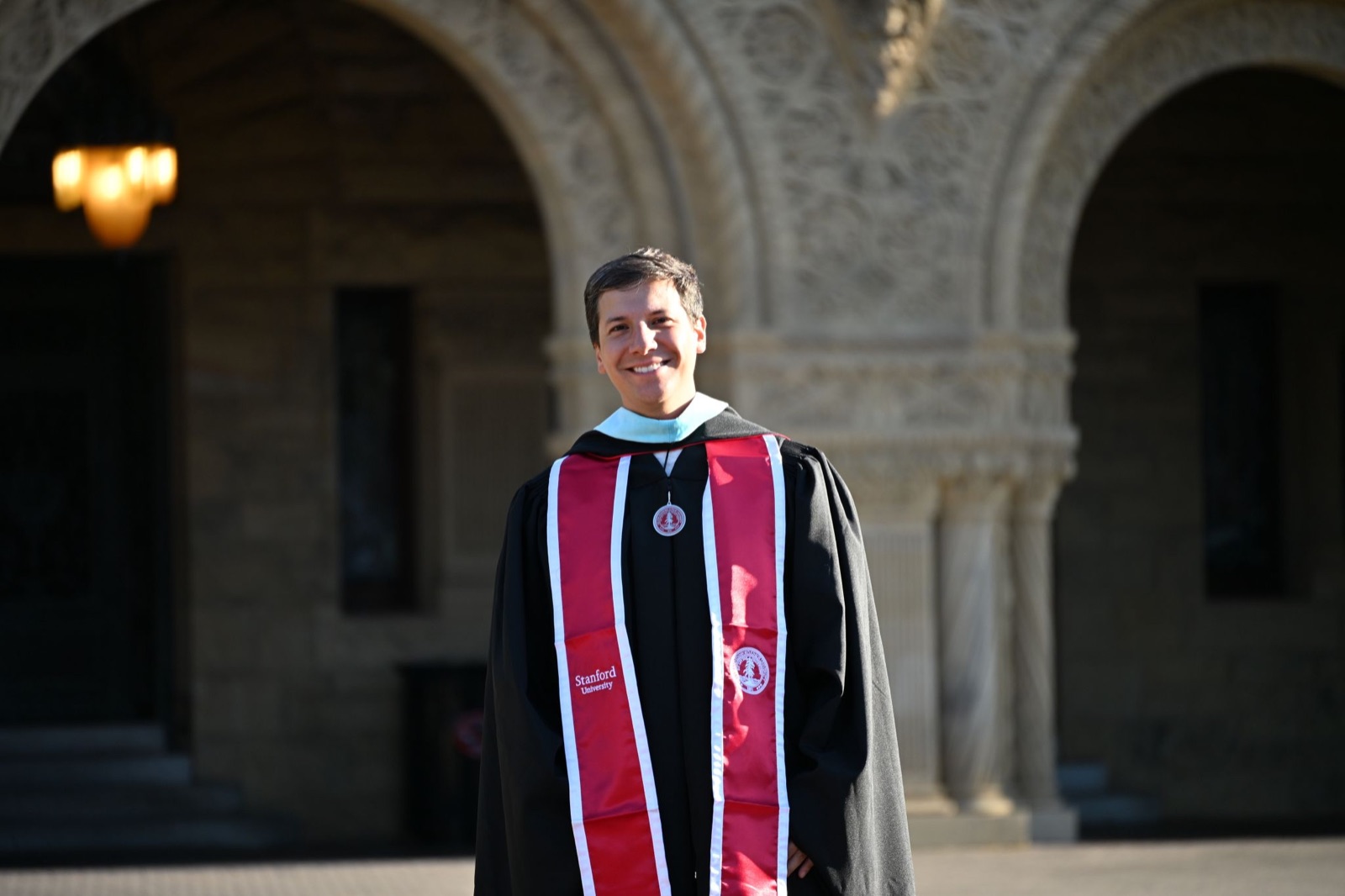
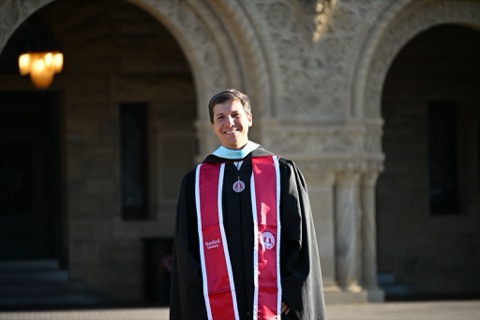
He qualified as a lawyer in Tucumán, worked eight years in Buenos Aires and applied to fourteen universities in the United States. He got into all fourteen. He graduated from Stanford in 2025, worked at a New York firm, and today he's back in Buenos Aires to open that same firm's South America Office.
We ask his age and he answers with a clarification. "I'm 30, it's been a long road." The road, in order: Bariloche, Tucumán, Massachusetts, Buenos Aires, Stanford, New York, and Buenos Aires again.
The first jump
He was born in Bariloche, to a family from Tucumán, and when he finished secondary school he went to study law in Tucumán, at the U.N.T. "That's 2,000 kilometers," he says. That was the first move, long before the idea of leaving the country came up.
The first time he was in the United States was during his degree, on a Fulbright scholarship. What he remembers first about it is the weather: he traveled during the Argentine summer and landed in the Massachusetts winter. "Very cold, even for a Patagonian." The stay was as short as it was intense and he came back with something that ordered the next ten years for him. "I knew my education didn't end with university, that I had to keep training."
After graduating with the award for top grade point average, he moved to Buenos Aires to work and to do a master's in law at Universidad Austral. He chose that program because it was the most flexible of the alternatives. "It had a super open program, the LLM, where I could choose the courses I wanted. And since I still wasn't sure exactly what I liked, or rather, I liked a lot of things, I went for that program and built it the way I wanted."
An LLM (Master of Laws) is the graduate degree in law for someone who already holds a law qualification, and many run without a fixed curriculum: the student picks the courses and builds their own plan. Ramiro used it to try out subjects before committing to one. Out of that came the two that are his daily work today. "Business, meaning corporate, commercial and contract law. And tech. From that moment on I followed that line, I followed it at Stanford and I'm still practicing it in my work today."
Eight years before applying
In Buenos Aires he worked at Navarro Castex, "doing mostly corporate and commercial law." In parallel he cofounded Innoley, a law and technology newsletter where he wrote about the subjects he would later study in California: crypto, platforms, the metaverse and gaming, among others. And once ChatGPT launched, he started studying artificial intelligence. Before leaving for the United States he opened his own firm.
That changes the starting point. When he applied to Stanford he had eight years in practice, his own client base and a defined focus. The most competitive LLMs ask for exactly that: Stanford's requires a law degree obtained outside the United States and, generally, a minimum of two years of professional practice before starting. A good grade point average isn't enough for the committee. Ramiro says that in a webinar run by Stanford's admissions office, the speaker said: "Everyone here has a good GPA. To come out west," drawing a parallel with the Wild West, "you have to be brave and adventurous. And above all, you have to be good people." Kind was the exact word.
Fourteen applications
"This sounds a little crazy: I applied to 14 universities. I still haven't met anyone who applied to more universities than I did."
It's worth translating that into numbers. For Stanford's LLM the deadline is December 1 of the year before entry, the application fee is 85 dollars and you have to submit a TOEFL iBT score of at least 100. They ask for two letters of recommendation, and one has to speak specifically to the candidate's level of English. They ask for a one or two page CV and a two to three page personal essay, where the applicant explains their professional experience, what they want to study and where their career is going. Transcripts are sent translated and validated by the LSAC credential service, the body that centralizes law school applications in the United States and charges its own separate fee.
Multiplied by fourteen: one English exam, fourteen essays adapted one by one, letters requested and renewed, translations, degree validation and fourteen fees. The answer comes between three and five months later.
He got into all fourteen. "I'm grateful for that," he says. And then: "Always with a bit of luck, but you have to force luck and go along with it."
His first choice never changed and was the last to answer him. "My top was Stanford, it was number one. It was the last one to let me know, the one that made me suffer most." The others on the short list were Berkeley, Columbia and NYU, chosen for the same reason: they're the ones with strong law and tech programs.
How he funded it
On funding, he says he covered part of it himself and the scholarship covered the rest. "I came with support and a scholarship from Fulbright Argentina with the Ministry of Education, so I'm super grateful."
Fulbright, across its different calls, usually covers round trip airfare, a monthly stipend for housing and expenses, health and life insurance, and test preparation courses.
Two practical points for anyone putting together an application. The calendar runs more than a year ahead and the two tracks go in parallel: the scholarship call is decided before the university applications close, so the essays, the TOEFL and the letters get prepared once for both things. And Fulbright grantees travel on a J-1 visa, which generally requires returning to the home country before being able to process certain work or residence visas in the United States.
Stanford, class of 2025
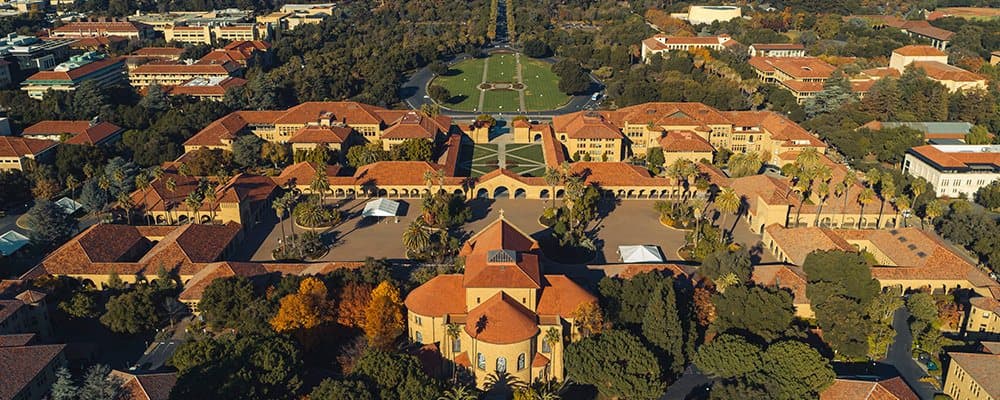
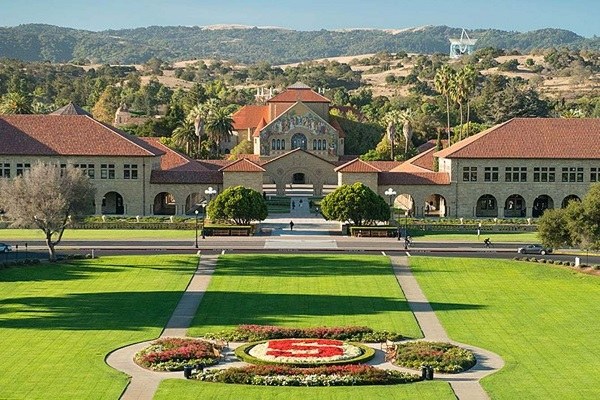
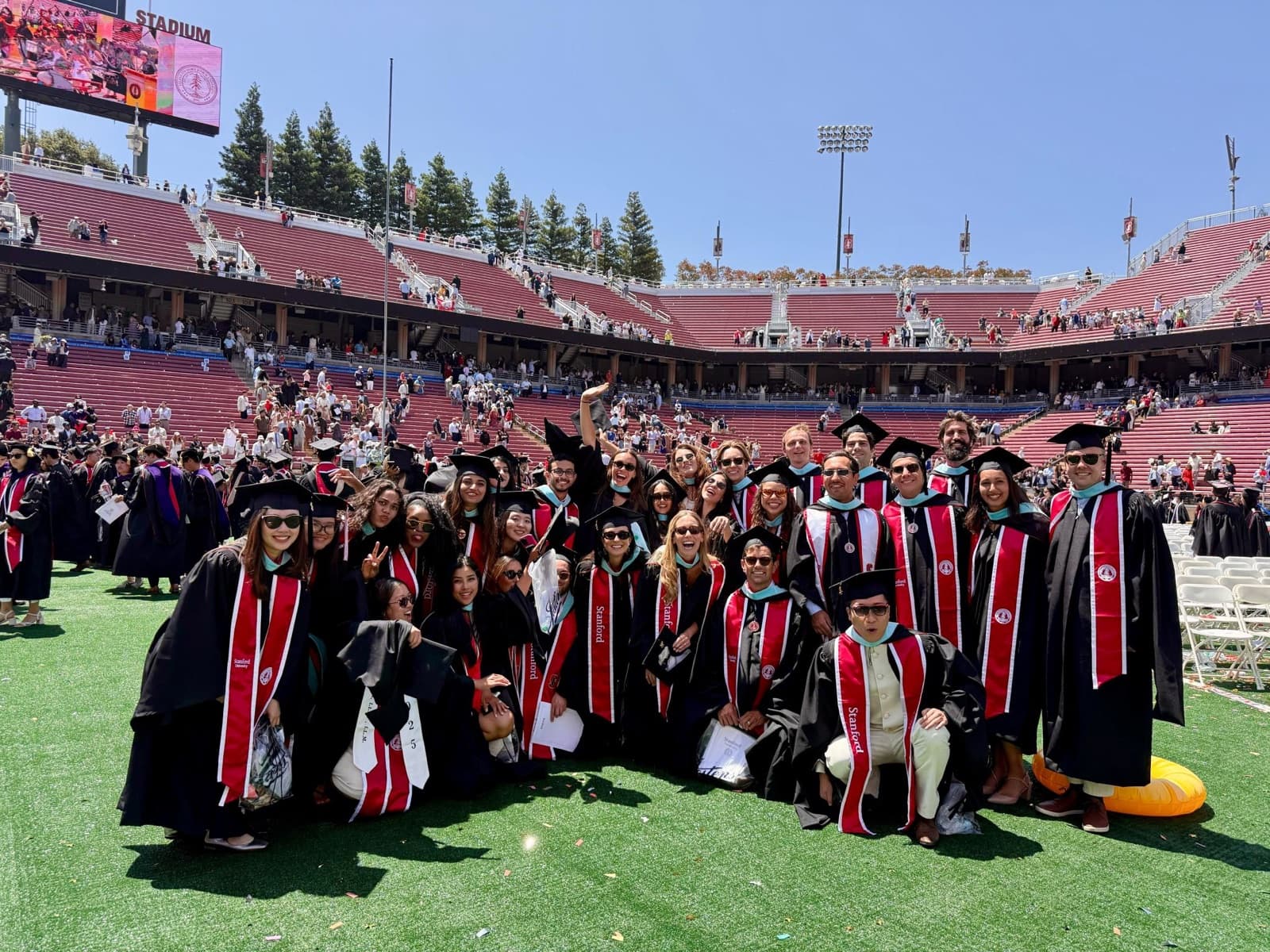
Ramiro graduated in June 2025 from the LLM in Law, Science and Technology, one of the four Stanford offers along with corporate governance, environmental law and international economic law. It's nine months of full time residence, between 35 and 45 credits and four required courses. The program crosses intellectual property, e-commerce, biotechnology, venture capital and startups. It's taught by faculty professors together with practicing lawyers, executives and scientists, and it gives access to the centers the school has on those subjects, like CodeX and the Center for Internet and Society. The school sits in Silicon Valley, which for his specialty is part of the program.
origin
Bariloche
destination
Stanford
institution
Stanford Law School
Of the year he says: "The best year of my life." The explanation doesn't start with the courses.
"For someone who's already been working, going back to being a full time student is spectacular. Especially with the model universities in the United States have, where you really are a full time student, you're at the university all day." He adds the campus and the weather. "The academic, cultural and educational life, plus everything the campus does for you, is a combo." And he adds that he'd been after it for a long time. "It was my dream for many years. Luckily I got to fulfill it."
On the academic level, Ramiro runs out of words. "It exceeded all my expectations, and my expectations were very high." He was able to take courses at Stanford's business school and also at the engineering and design schools. "On a random Tuesday, Hillary Clinton gave a talk. Another time, instead of having a normal class in my Blockchain course, we had a panel with Vitalik Buterin, the founder of Ethereum. In my last month on campus, I was riding my bike back to my apartment and ran into Roger Federer playing tennis on one of the courts. And that's without mentioning the first rate professors in every law school course."
From California to New York
After graduating from Stanford, he switched coasts and moved to New York to work at ALVK Law, a firm founded in 2023 by Argentines who graduated from Cornell Tech's LLM and that provides legal services to technology companies in the United States. He found a job doing the same thing he had chosen back at Austral: supporting startups and founders on deals, financing and company growth.
Going from an LLM to a job in the United States has concrete rules. An LLM taken at an ABA accredited school qualifies a foreign lawyer to sit the New York bar. The conditions are a minimum of 24 credits, taken across two regular semesters of at least 13 weeks each, with required credits in professional responsibility, legal research and writing, the U.S. legal system and subjects that are tested on the exam. The coursework has to be in person on the U.S. campus and the degree has to be obtained within 24 months of starting. The course plan you put together in September defines what you can do the following year.
We ask him what it feels like to work at a firm in New York. "Like being in a movie."
In Suits?
"Suits is a bit exaggerated, but you feel that vibe." The day to day, in his words: he gets up, goes to the office, and they field and block penalty kicks. Of the city he says it "is a very fast city, but it's a lot like Buenos Aires in some ways. As Argentines we're more ready for this environment." And he adds: "Everyone you meet is doing something wow."
The advice
We ask what he'd say to someone finishing secondary school or starting university who wants a similar path. He doesn't talk about grades or exams.
"Research, and above all talk to people. In Argentina it's something we're not that good at: writing to someone we admire or who has a path we want to follow, asking them, getting a coffee, saying how did you get here. And a lot of the time that advice takes us to the point we want to reach. Culturally we don't do it much, and here it's done all the time."
The famous networking, we say. "The famous networking," he repeats.
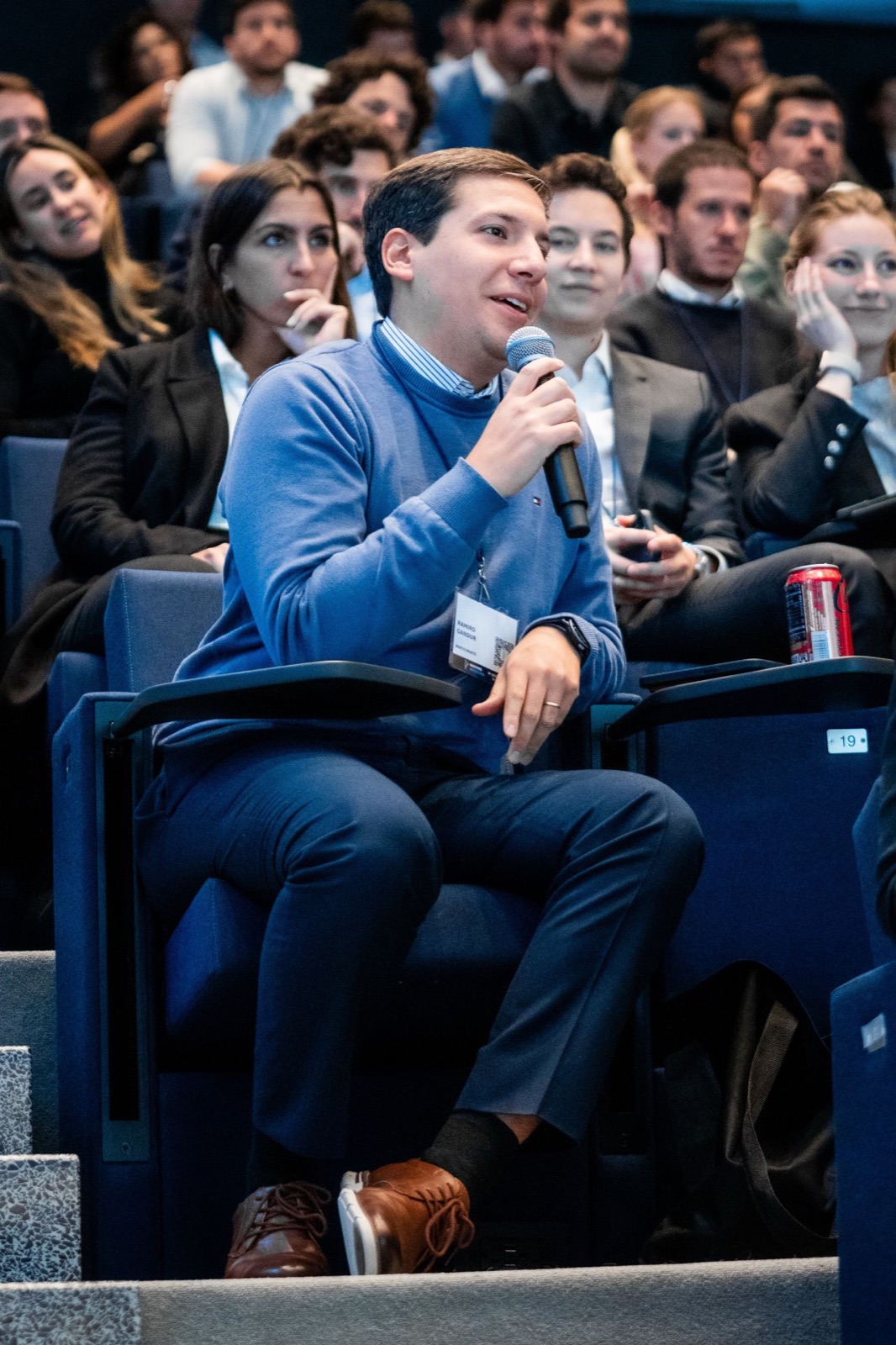
This interview came out of exactly that: we met at a networking event at the Harvard Club in New York and recorded it in the same place.
Last question: whether he's going back. "I'm going back to Argentina, yes. My wife and I are going back. That's the plan," he told me at the time. Today Ramiro has settled in Buenos Aires with the challenge of opening ALVK Law's local office and continuing to expand his startup practice. "I want to help boost Argentine projects and talent. I want startups to be able to access financing, to scale and to grow. That's the small bit I want to contribute."
Before we turned the camera on he had told us that one of his personal goals is for more Argentines to go study the LLM at Stanford, and that any questions left over should be sent to him.