
Stage II · Choose
From public health in Brazil to a healthcare administration master's in Washington: Alessandra Galvão's experience at University of the Potomac
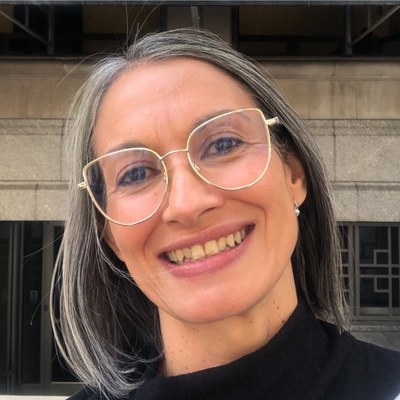
Alessandra Galvão · 29 August 2026
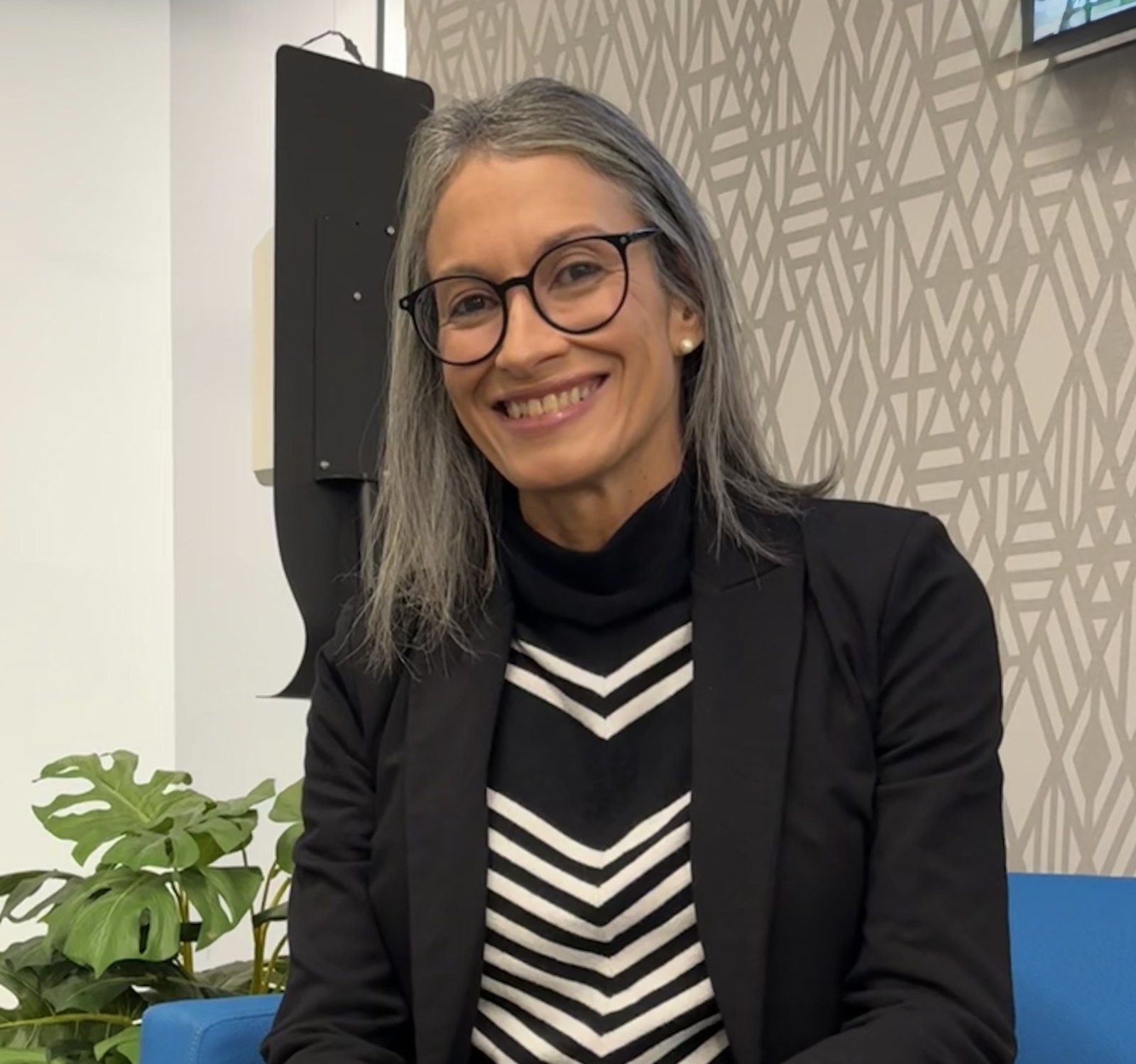
Alessandra Galvão is a physician and pediatrician who spent much of her career working in public health in northeastern Brazil, including coordinating child and adolescent health policies in Recife and Olinda. After nearly two decades in the field, she decided to study abroad. In April 2024, she began a Master of Healthcare Administration at University of the Potomac in Washington, D.C., where she also later joined the student services team on campus.
The idea of studying in Washington did not begin with a university search. For Alessandra Galvão, it started years earlier, during a short work trip that stayed with her long after she returned to Brazil. By the time she eventually enrolled in a graduate program in the city, she already had a long career in medicine and public health behind her. Going back to school was not about starting over. It was a way of looking at the work she had been doing for years from a different perspective.
Twenty years working in public health
Alessandra trained as a pediatrician and completed part of her medical training in Campinas, São Paulo, before returning to northeastern Brazil. Over the years, her work increasingly moved beyond clinical care and into public policy, particularly around the health of women and children. She coordinated comprehensive child and adolescent health policies for the municipal health departments of Recife and Olinda and worked across government, community organizations and other institutions.
“I worked with women's and children's health throughout my career. I like working on policies and building relationships between nongovernmental organizations, governments, municipalities and states.”
An international dimension had also been part of her life long before she considered graduate school in the United States. As a medical student, she helped coordinate exchanges that sent Brazilian medical students abroad and welcomed students from other countries into Brazilian universities. She remembers enjoying not only the academic side of those programs, but also what happened when people with very different backgrounds were brought into the same space.
That interest in learning from other systems would eventually become one of the reasons she decided to study abroad herself.
A trip to Washington that stayed with her
In 2016, Alessandra traveled to Washington for a Pan American Health Organization meeting connected to the response to the Zika virus, which had hit northeastern Brazil particularly hard. She was there representing Brazil and spent only a few days in the city, staying in Georgetown, but the visit made enough of an impression that she left thinking she would like to return. “I stayed in Georgetown and fell in love with the place. I remember thinking, I want to come back here someday and stay longer.”
Seven years later, she did. Alessandra returned to the Washington area in 2023 and spent several months getting to know the city and Northern Virginia more slowly. During that period, she volunteered at the front desk of a hotel, an experience that looked very different from the work she had been doing as a physician in Brazil but fit naturally with the way she describes herself.

“It might sound a little crazy. What is a doctor doing volunteering at the front desk of a hotel? But I love adventures and I love learning. That is what makes me want to do different things. I want to learn everything.” It was through that experience that University of the Potomac first entered the picture. One of her managers had completed an MBA there and mentioned the university to her. Alessandra had already been considering graduate school, so she began researching programs in the area.
Looking at healthcare from a different system
Her first instinct was to look for a degree in public health, the field closest to the work she had done in Brazil. But the programs she found were more expensive than she wanted to take on, and University of the Potomac did not offer the exact degree she had initially imagined.
What it did offer was a Master of Healthcare Administration, and that shifted the way Alessandra thought about what she wanted from graduate school.
“I looked at public health programs, but the prices were very high. Potomac didn't have public health, but I found Healthcare Administration and thought, this is it. It was an opportunity to understand another healthcare system, one that is completely different from ours.”
For someone who had spent years working inside Brazil's public health system, studying healthcare administration in the United States offered more than another credential. Alessandra was interested in seeing how a very different model worked from the inside, understanding both what it did well and where it struggled, and comparing that experience with what she already knew from Brazil. She did not arrive assuming that one system had all the answers. That comparison was part of the reason she wanted to study in the first place.
Having someone guide the admission process
Once Alessandra decided to apply, one person became especially important in helping her turn the plan into something concrete: Carolina, from the admissions team. “Carolina was amazing. She told me all the documents I needed and even did a mock visa interview with me. She would say, they may ask you this, what are you going to answer? From gathering the documents until I arrived in Washington, she was there with me the whole time.”
For Alessandra, that support mattered because the application was only one part of a larger transition. She was organizing graduate school, preparing the paperwork required to study in the United States and moving her life from Brazil to Washington at the same time. Having someone she could ask questions made the process feel much more manageable. “I felt like I had a partner in the process.”
Becoming part of the university
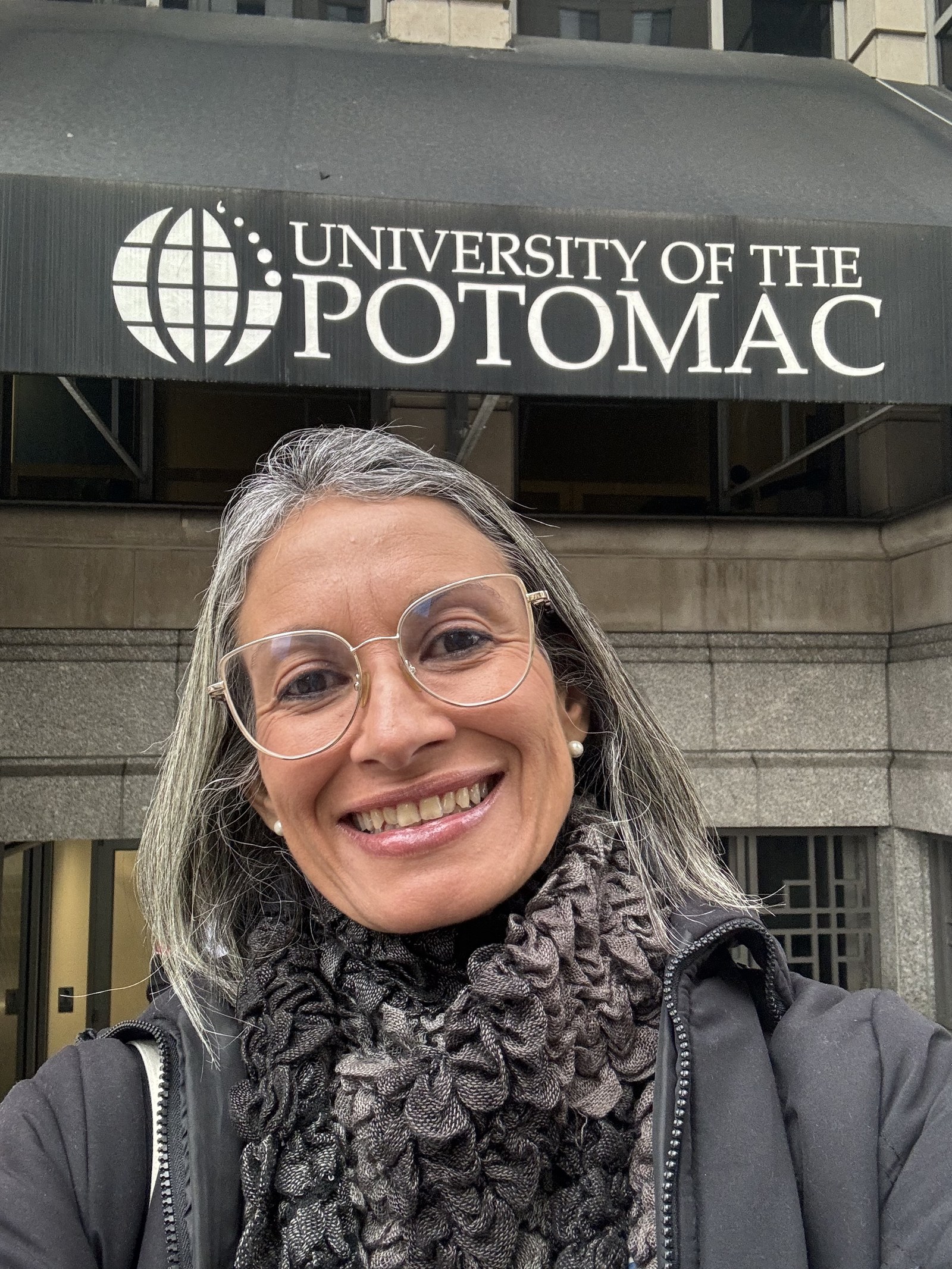
Alessandra began her program in April 2024. A few months later, she took on a role at the front desk in student services, which became one of the most memorable parts of her experience at Potomac.
origin
Recife
destination
Washington, D.C.
institution
University of the Potomac
For her, working on campus changed the relationship she had with the university. She was no longer only arriving for class and leaving afterward. She became part of the place where other students came with questions, problems and everyday concerns, and that gave her a perspective she had not expected when she enrolled.
“Working there was one of the best parts. I love studying and I love being a student, but when you also work there, you see the university differently. You feel like you are part of it.”
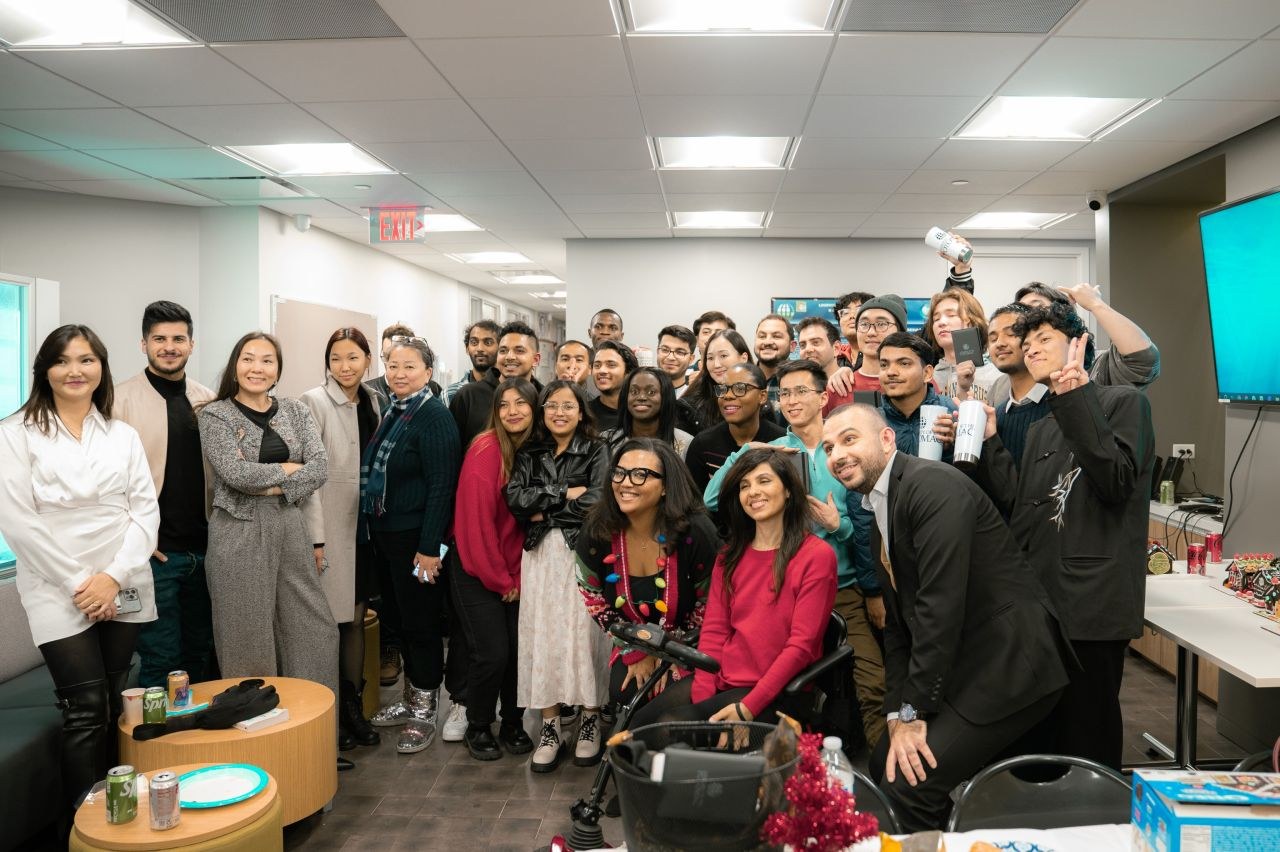
The job also brought her closer to the people behind the institution and to the small moments that shape campus life outside the classroom. She remembers the events organized by the student services team, from holiday celebrations to activities for students, almost as fondly as she remembers her courses.
That sense of belonging became especially important to Alessandra because she had arrived in Washington after a long professional career elsewhere. The university was not simply a place where she was collecting another degree. It became a community in which she found a role for herself.
A classroom with people from around the world
One of the things Alessandra valued most was the mix of people she met. Her classmates came from countries and cultures she had not necessarily encountered during her career in Brazil, and the experience of studying together quickly extended beyond coursework.
“You study with people from Nepal, India, Mongolia, Chile, Africa. You become friends, you go out together, you learn about the food, the languages, the cultures. I think you learn how to respect differences.”
That international environment connected with something Alessandra had enjoyed since medical school, when she first became involved in student exchanges. Decades later, she found herself on the other side of that experience, this time as the international student.
The academic side of the program also gave her what she had been looking for when she chose healthcare administration: a chance to see the U.S. healthcare system without idealizing it.
“It was interesting to discover that the healthcare system in the United States also has a lot to improve. That was part of what I wanted: to understand it from the inside.” For Alessandra, the comparison did not make her think less of either country. It gave her more material to think about how different systems solve problems, where they fall short and what one place might learn from another.
Making the path easier for someone else
When Alessandra talks about other Brazilians who are considering studying in the United States, she does not describe the process as effortless. Instead, she uses an image that reflects the way she approaches most things: once you have walked a difficult path yourself, you can make it easier for the next person to see where to step. “I would build them a book showing them the stones along the path, so instead of walking into the water, they would know where to put their feet.”
She is quick to say that there is no single path that works for everyone. What she can offer is what she learned from her own experience: how she researched programs, prepared to move, navigated the university process and adjusted to studying in another country after many years in her profession.
That willingness to help others is also connected to what she found at Potomac. When asked to describe the university, Alessandra did not talk first about a program or a course. She talked about how it felt to arrive there.
“It felt like home. When I was working there, I always felt like I was arriving home when I walked in. I went to work happy, and sometimes I stayed longer than I needed to.”
For someone whose first connection to Washington began with a three-day work trip in 2016, that may be the clearest way to describe how much the city eventually became part of her story.
Did this story help?
Join the community