Stage VI · Apply
What the process of applying to a master's in the United States looks like: the experience of two Fulbright scholars
Victoria Contreras del Olmo and Bahía Gatti · 20 August 2026
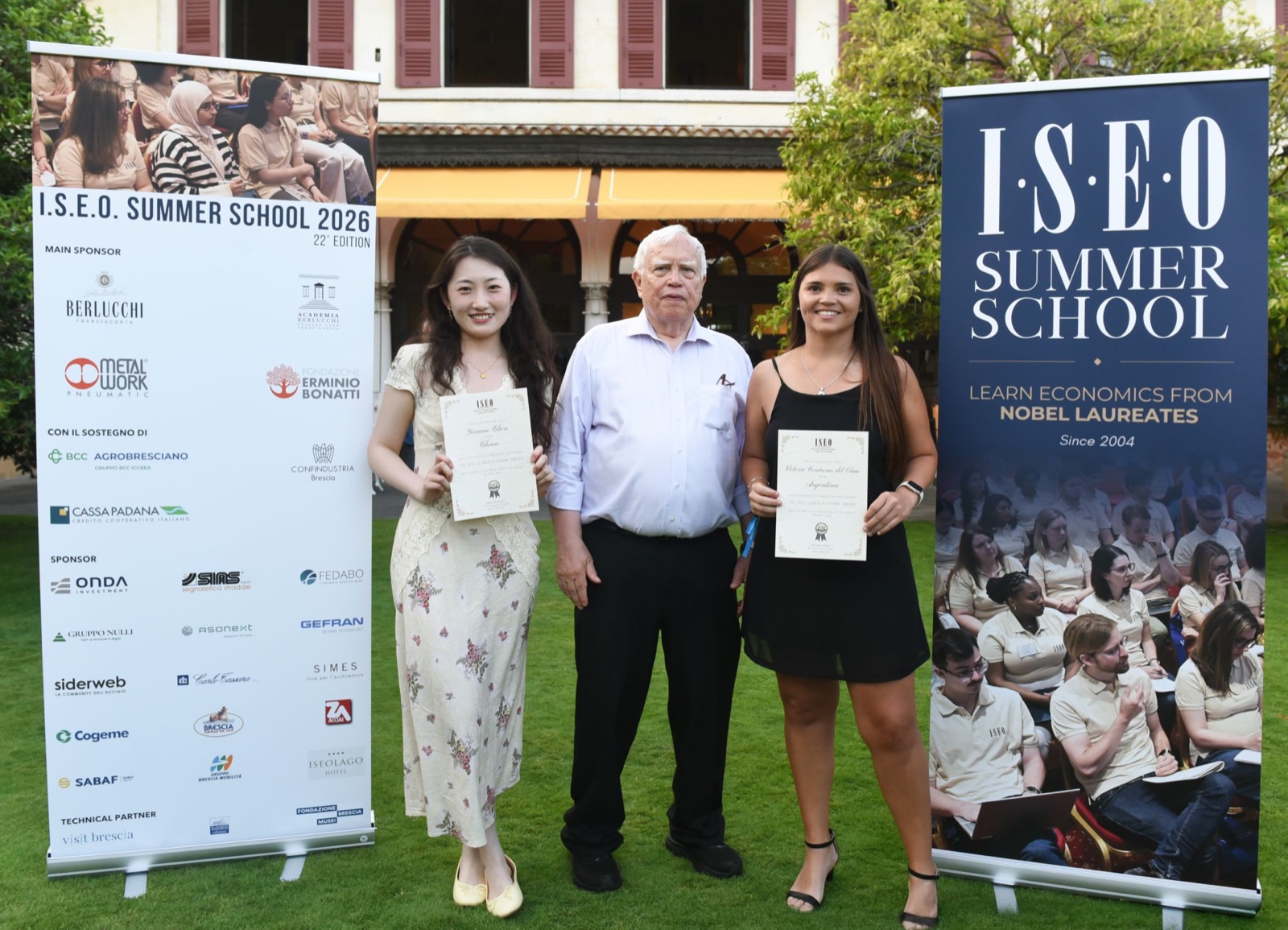
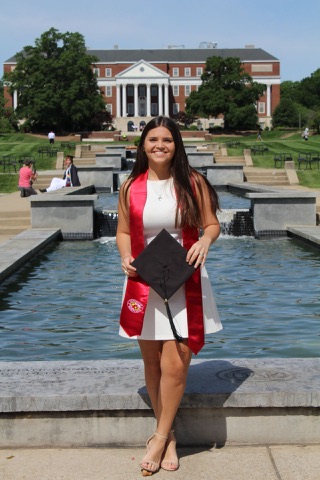
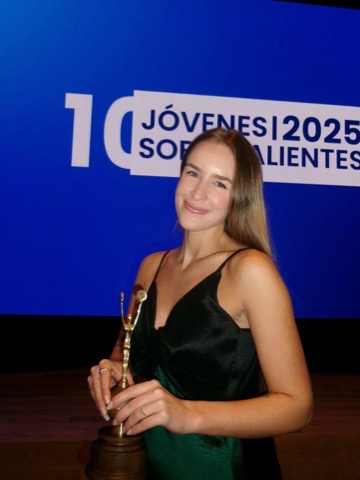
Victoria Contreras del Olmo and Bahía Gatti applied to Fulbright for the first time in March 2022 and weren't selected. Months later they applied again to a joint call from Fulbright and the Consejo Federal de Inversiones aimed at candidates from Argentina's provinces, and this time both won the scholarship. Victoria, from Salta, a political scientist with a degree in international relations from Universidad Torcuato Di Tella, did the Master of Public Policy at the University of Maryland. Bahía, from Córdoba and also trained in international relations and political science, did the Master of International Affairs at Columbia University. Both traveled to the United States in 2023 and reconstruct here how the process went from the first application to arriving at university.
This piece is different from the others in the series because it doesn't only reconstruct a professional record, but an application process that Victoria Contreras del Olmo and Bahía Gatti went through practically in parallel. Both applied to Fulbright in 2022, got a no in the first call and applied again that same year to a second option aimed at candidates from outside Buenos Aires.
“In 2022 we both applied to the Fulbright scholarship in March, which is when the call closes, and we weren't selected. But in August there was a new call, jointly with the Consejo Federal de Inversiones for the interior provinces, and that time we did get it. Salta and Córdoba, representing the interior.”
The second call also had a tighter calendar than the regular process. Because they were selected several months after other scholars in the same cohort, they had less time to prepare for the admission exams, settle on universities, write essays and complete the different applications.
First, deciding where to apply
One of the first decisions after winning the scholarship was building a list of universities. There are hundreds of graduate programs in the United States and, for someone starting the search from Argentina, the internationally best known institutions are only a fraction of what's available.
“Apart from the documents and the more bureaucratic part, you had to choose the universities. The thing is there are so many universities in the United States that you know ten, twenty. You have to research, analyze the programs, which ones suit your profile, and put together a ranking of your favorites.”
In a process run through Fulbright, that list isn't put together entirely by the candidate. The program also takes part in choosing institutions and can recommend changes based on academic profile, chances of admission and the funding options available.
“They have to accept that list, and sometimes they tell you they're changing some of the list you submitted or suggesting others. And you have to accept or turn it down.”
So choosing universities isn't just a matter of ordering institutions by ranking. You have to compare the academic content of each program, the entry requirements, the usual profile of its students, the funding opportunities and the cost that might be left over after receiving any institutional scholarship.
In Victoria's case, that search ended at the University of Maryland, where she did a master's in public policy with a specialization in international security and economic policy. Bahía chose the Master of International Affairs at Columbia University, in New York, with a specialization in technology.
The exams
Another important part of the preparation was sitting the exams the universities required. At the time, both had to prepare for an English exam and for the GRE, though the specific requirements depend on each program and can change from one year to the next.
The TOEFL assesses reading and listening comprehension, speaking and academic writing in English. Beyond the total score, some universities set specific minimums for each section, something worth checking before picking an exam date.
“I had to sit it twice because, even though I got a good result, more than 110 out of 120, in the speaking I'd got 24, and some universities like Harvard asked for at least 25 in each section plus more than 100 overall. It can be tricky: the exam isn't that hard, but the speaking is the section you have to be most careful with. Knowing how to speak English doesn't mean you'll do well in the TOEFL speaking.”
The experience helps separate mastering the language from knowing the format of a standardized exam. Someone can use English every day and still need specific preparation to answer within the time and the structure the TOEFL demands.
The GRE posed a different kind of difficulty. Since both came from areas tied to the social sciences, the quantitative section meant recovering math they didn't necessarily use day to day.
“We both come from social science areas, so math and statistics weren't our strong point. It's a very demanding exam and we had very little time to prepare for it. I'd recommend preparing for three months minimum, and we had one.”
To study they used Magoosh, a preparation platform that combines theory, exercises and practice exams. They chose it mainly because they could organize their study around their own schedules and because finding teachers who specialized in the GRE in Argentina was a lot harder.
“It gives you practice exams and modules where they teach you all the topics you'll be tested on, and if you do well there you have a benchmark for the real exam.”
The TOEFL and GRE formats have changed since Victoria and Bahía made their applications, so lengths, sections and requirements have to be checked again at the time of applying. What still holds is that it's worth looking first at what each university requires and preparing for the exams based on the specific list of programs.
The essays
Along with academic records and exams, Fulbright requires essays in which the candidate explains both their personal and professional record and the academic goals of the master's. “You have to write the personal statement and the study objective. They're different, each one has its own features, and it's demanding.”
The two documents do different jobs. The personal statement lets you explain experiences and decisions that help make sense of the candidate's path, while the study objective is more focused on what they want to study, why they need that training and how it connects to their professional record.
The most useful way to think about them, based on both their experience, was to build a clear line between what they had done up to that point, the training they were looking for in the United States and what they meant to do afterwards.
“What you did before, what you're doing now and where you want to get to. In other words, what the reason is that you want to study this master's.”
The point isn't simply to list achievements that already appear on the CV, but to explain why a particular program makes sense within a concrete professional path. The essays can also take on more weight when other parts of the file, such as a standardized exam, aren't especially strong.
After applying, waiting for the answers
Once the forms are in, a period of several months begins in which the universities assess the applications and announce their decisions on different dates.
“We finished sending everything around December, some in January, and the answers start arriving at the end of February, March, April, with most of them around March.”
The uncertainty isn't limited to whether a university will admit the candidate. In many cases, funding is announced along with the admission or shortly after, so over several weeks you receive different combinations of acceptance and financial aid.
“You don't know if they'll admit you, and if they do, how much scholarship they'll give you. Because if every university accepts you but none of them gives you a scholarship for tuition, maybe you can't travel.”
This matters especially for international candidates because the cost of a US master's can be very high and Fulbright doesn't necessarily replace all the financial aid the university has to contribute. In many cases, the final setup ends up combining different resources.
Victoria, for example, received a scholarship from Maryland that covered 40 of the 48 credits of her master's, on top of the support she already had from Fulbright. Bahía also complemented Fulbright's funding with other scholarships to study at Columbia.
That's why it's worth waiting, whenever the deadlines allow, until you have all the academic and financial offers before making the final decision. “You have to wait for them all to come in so you can decide which university works best for you, based on which ones accepted you and what scholarship they offered.”
Talking to universities about funding
An admission letter doesn't necessarily mean the financial terms are final either. When a student receives offers from different universities, they can ask whether there's room to improve the funding package, especially when they need to cover a gap in order to accept.
origin
Salta and Córdoba
destination
United States
institution
Maryland and Columbia
“If you're still a bit short, you can try asking them to give you more. Universities understand it.”
The negotiation can be as simple as explaining that there's another offer that's financially better, asking whether there are additional funds available, or asking about assistantships and other forms of support. Not every university changes its proposal and there's no guarantee of getting more money, but asking is part of the process at many programs.
The other thing Victoria and Bahía had to settle was how much they were willing to fund with personal debt. A university can be academically attractive and, even after aid comes in, leave a considerable gap.
Victoria had been admitted to Duke, but the offer meant taking out a loan to cover the remaining amount and she decided not to. “I had got into Duke, but even negotiating I was going to have to take a loan, and personally I didn't want to do that.”
Comparing offers, then, means looking at more than the institution's name. The final cost, the type of funding and the debt that may be left after graduating can completely change which option is the better one.
The visa
Once the university was chosen, the immigration stage began. As Fulbright scholars, both traveled on a J-1 visa and had help from the program to handle the paperwork and the consular appointment.
“I did the visa in July. It was quick, I think it took me half an hour. Fulbright gets the appointment and pays for the process, so we didn't have to worry about that part.”
The J-1 visa has particular conditions worth knowing about before accepting the scholarship. Among them, many participants are subject to the requirement known as 212(e), which requires accumulating two years of residence in the home country before being able to access certain US immigration categories, unless they later obtain a waiver.
The important point is that those conditions are part of the program from the start and have to be weighed alongside the academic and financial opportunity, especially if the candidate is also thinking about work options in the United States after graduating.
Traveling and starting the master's
Most academic programs start between August and September, though some scholars arrive earlier to take English courses or do other preparation.
“Generally in August. Some traveled a bit earlier, when their English level was lower and they had to firm it up: they left in July to do an English course before going to their university.”
From there, Victoria's and Bahía's processes separated geographically. Victoria settled in College Park, Maryland, near Washington, while Bahía moved to New York to start her studies at Columbia.
Settling in wasn't the same for both either, and it was shaped partly by what each city is like and by the networks they found on arrival. Bahía remembers needing several months to feel fully settled in New York.
“Honestly I think it took me six months to complete the whole cycle of feeling one hundred percent adapted, happy and settled in New York, and I also had a move in the middle of it.”
Victoria found a different experience in the Washington area, where her first circle had fewer Argentines and a higher share of American students and friends.
“The first semester was pretty hard. Unlike New York, where there are a lot of Argentine scholars, in Washington there aren't many of us, so adapting to a new culture, with all American friends, was much harder for me.”
The comparison also shows a factor that rarely comes up when assessing universities from Argentina: two academically similar programs can offer very different social experiences depending on the size of the city, the structure of the campus and how many international or Argentine students live nearby.
What they learned from the process
Their experience didn't follow a particularly tidy sequence. They applied to Fulbright once, weren't selected, found another call a few months later and submitted their records again while they were still current.
That second application ended up taking them to different universities and cities, but on a fairly similar timeline: Fulbright in 2022, university applications over the following months and a move to the United States in 2023.
“Apply even if you think it won't happen, because you never know. The two of us had, within four or six months, the no and then the yes.”
Beyond persistence, there's a practical recommendation behind that experience: a rejected application doesn't necessarily have to be rebuilt from scratch. The essays, the CV and other materials can be revised and reused for later calls.
“Recycle the applications. If at some point they rejected them, use it again, improve it and send it again.”
Fulbright isn't the only option available either. Depending on the destination country and the type of program there are other international calls, among them Chevening, Erasmus and Fundación Carolina, plus universities' own scholarships and those from outside organizations.
The whole process took several months and combined academic, financial and immigration decisions. For Victoria and Bahía, much of the work lay less in completing any one form than in coordinating exams, essays, university lists, funding and deadlines all at once, while each answer kept changing the options available.