
Stage III · Fund
From Ecuador to Maine with full financial aid: Mateo Morales's experience at Bowdoin College
Mateo Morales · 12 September 2026
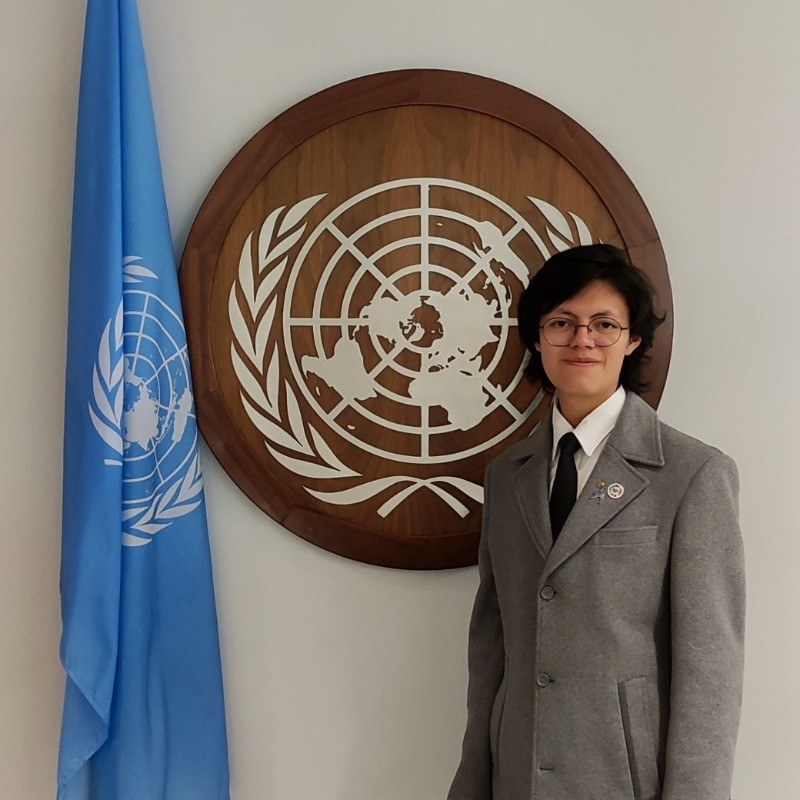
Mateo Morales grew up in Yaruquí, a rural parish east of Quito, and finished secondary school with an idea no one in his family had taken on before: studying for an undergraduate degree in the United States. He joined a program that supports young Latin Americans through the application process, put together a list of around ten universities, and in 2025 he started his studies at Bowdoin College, in Maine. The university's financial aid covers tuition, housing, food, and health insurance for all four years. He's now in his second year.
Mateo didn't arrive at Bowdoin after an exchange, a family tradition, or a university he'd known about since he was a kid. The idea of studying in the United States started on his own initiative and took shape as he came to understand how admissions worked, which universities could offer financial aid to international students, and what he needed to build to have a real chance of getting in. Two years after starting that search, he moved from Ecuador to Maine to begin an undergraduate degree with his main costs covered.
Turning your own idea into a plan
When people ask where the idea of studying in the United States came from, Mateo doesn't point to a specific moment or a person who pushed him into it. His answer is much simpler: “Personal interest.”
What did show up later was a structure that let him turn that interest into a concrete application. Mateo was selected for a program run by an academy that spends a year working with young people from Latin America who are interested in applying to universities in the United States. The support included one-on-one guidance, essay review, help with translations, and assistance organizing the different stages of the application.
For Mateo, that support mattered especially because he was entering a system he didn't know firsthand. There was no one in his family who had been through the same process, and it wasn't enough to find universities he liked: he had to identify institutions where an international student who needed financial aid had a real chance of making the degree feasible.
That difference ended up shaping the whole search. Before thinking only about prestige, location, or degree program, he needed to understand which universities offered funding to international students and how those policies worked.
Building an application from Ecuador
Once he had the list, the work of putting the file together began. Mateo sums it up pretty directly.
“School transcript, two letters of recommendation, my parents' tax return. Completing the Common App application. It didn't cost me anything, it was all covered by my program.”
The Common App let him use a single platform to apply to several universities, though each institution could add its own essays and requirements. He asked for the letters from teachers and mentors who knew him from his secondary school, while the financial documentation was what allowed universities that offer need-based aid to calculate the corresponding support.
The program that supported him also covered the costs tied to the process. That meant exams, documents, and applications didn't become a barrier before universities had even evaluated his candidacy.
For a student starting out from another country, that part can go unnoticed: applying costs money too. In Mateo's case, having a program absorb those costs let him focus on building a competitive application without ruling out options just because of what it cost to apply.
Choosing carefully where to apply
Mateo ended up sending applications to roughly ten universities.
“I applied to roughly ten universities. I didn't negotiate anything after admission.”
The number matters, but what mattered more was how that list came together. For an international student who needs a high level of financial aid, not all U.S. universities work the same way. Some offer little or no aid to foreign students; others can cover part of it; and a much smaller group can end up covering practically the entire cost the family has demonstrated.
Bowdoin belonged to that last group and, on top of that, it evaluates international students without using ability to pay as a criterion for deciding admission. Once a student is admitted, the university calculates the family's financial need and puts together an aid package to cover it.
For Mateo, understanding those differences was one of the most important parts of the process and also one of the things he'd improve today if he had to start over.
“The research process before applying to universities.”
The reflection is simple, but it changes the strategy quite a bit. A good list isn't built just by asking someone where they'd like to study, but by crossing academic interests, admission chances, and financial aid policies. In his case, researching that combination better from the start would have made the process even more efficient.
A single English exam
Unlike many students who prepare for the SAT, the ACT, and language exams all at once, Mateo took only the Duolingo English Test to demonstrate his level of English. Bowdoin accepts that exam along with other options and is also test optional for the SAT and ACT, so he didn't need to add another standardized exam to his application. The Duolingo was also covered by the program supporting him.
That let him spend more time on other parts of the application: the essays, the recommendations, the selection of universities, and the financial documentation. In admissions processes this competitive, cutting requirements that aren't necessary can also be a strategic decision.
Reaching a university that could make it possible
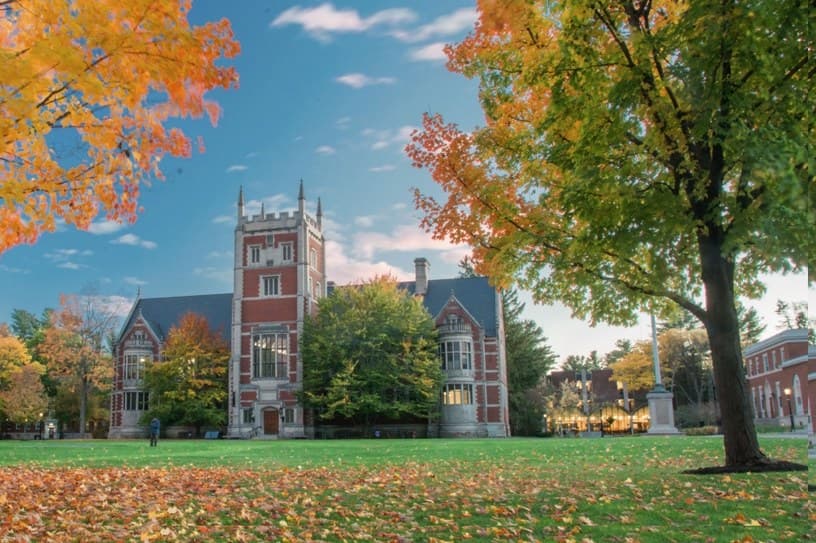
In 2025, Mateo was admitted to Bowdoin College, a small residential university in Brunswick, Maine. The admission came with financial aid that covers the main costs of studying there for all four years.
“Tuition, cost of living, flights, health insurance. Four years.”
origin
Quito
destination
Brunswick, Maine
institution
Bowdoin College
Bowdoin covers the demonstrated financial need of its admitted students through institutional aid and without including loans in the package. For Mateo, that turned an academic admission into an option he could actually take.
The scale of that support makes more sense when you look at the total cost of a residential university in the United States. Tuition, housing, food, and health insurance can push the annual budget into the tens of thousands of dollars. At an institution like Bowdoin, where much of the university experience happens on campus, those components aren't extras: they're a central part of the cost of studying. That's why, for Mateo, financial aid wasn't an added benefit that showed up later. It was a necessary condition for being there at all.
The part he couldn't fully control
When people ask him what was hardest about the process, Mateo doesn't talk about the essays, the documents, or the English exam.
“Getting accepted.”
The answer sums up a reality of highly selective universities: there's a point where a student can prepare a good application, choose his recommendations carefully, write his essays, and build a smart list, but not control the final decision.
Bowdoin receives thousands of applications for a relatively small cohort, and for an international student who also needs full financial aid, the universe of universities with generous enough policies is smaller still.
That makes the preparatory work especially important. Mateo couldn't guarantee an admission, but he could improve his chances by building a realistic list, understanding which institutions supported international students, and submitting an application that showed clearly who he was and what he could contribute. His admission to Bowdoin was the result of that process.
Getting from Ecuador to Maine
The change wasn't only academic. Mateo went from growing up in Yaruquí, near Quito, to living at a residential college in a small city in Maine, where much of daily life happens on campus.
“The quality of life is expensive compared to Ecuador.”
Financial aid solved the main costs of university, but moving to another country also means learning to manage different expenses and routines. The contrast between Ecuador and Maine is as much a part of studying abroad as the classes are.
Today, in his second year, Mateo is already past the part of the process that once looked hardest: researching universities from Ecuador, keeping around ten applications going, and waiting for decisions without knowing which one, if any, would end up becoming a viable option. He still has several years of his degree left, but he already has a perspective he didn't have when he started.
Don't give up before you send the application
When he thinks about another student in Ecuador who's looking at U.S. universities and feels the process is too long, too complicated, or too far away, Mateo doesn't try to make it sound easy.
“Don't give up, however tedious the process turns out to be.”
His own experience shows why. The idea started on a personal level, with no family path to copy and without knowing exactly how U.S. admissions worked. Then a program helped him organize the search, a list built around universities that could offer the support he needed, and months of work to complete each application.
Two years later, Mateo was starting his degree at Bowdoin with financial aid for his entire undergraduate program.
If he could go back to the beginning today, he'd research even better before putting the list together. But he wouldn't change the decision to try.

Did this story help?
Join the community