Stage III · Fund
He got into three universities in the United States and had to turn down two: Santiago Verri's story
Santiago Verri · 5 September 2026
He's 17, he's from Laborde, Córdoba, and he started looking into studying in the United States while he was still in secondary school. He was admitted to Florida International University and to the University of Texas at San Antonio, but ruled out both options because the final cost was still too high for his family. He eventually found an alternative with a scholarship at North Carolina Wesleyan University, where he'll begin International Studies in the spring semester of 2027.
Santiago Verri hasn't started university yet, but he has already been through a part of the process that tends to be a lot less linear than admission letters make it look. For several years he researched universities, scholarships and requirements from Laborde, applied to different institutions and had to compare not only where he could get in, but how much each alternative really cost after a funding offer came through.
An idea that started during secondary school
“My dream of studying in the United States started when I was about 13. At the time I wanted to do an exchange year during secondary school, but for different reasons it never worked out. Even so, that dream never went away.”
Over the years, the idea of doing an exchange turned into the possibility of studying for a full degree in the United States. The main difficulty was financial: for an Argentine family, the costs published by many US universities can make the option look ruled out before you even start researching scholarships.
“Over time I started thinking about studying for a university degree in the United States, but it seemed impossible. My parents couldn't take on the cost of a US university, so for a long time I felt it was a very distant dream.”
For international students that limit matters a lot because, in general, they don't have access to the US federal financial aid available to citizens and other eligible categories. That means much of the search focuses on the scholarships and discounts each university offers from its own funds, and it forces you to review the terms institution by institution.
Researching before applying
Santiago began devoting more and more time to looking for universities, financial aid programs and the experiences of other international students, well before he knew exactly where he would apply.
“Everything changed when I started researching a huge amount about scholarships and universities. I spent hours every day looking for information and watching other students' experiences. In that process I found Bahía Gatti's videos and, thanks to her, I discovered the international relations / International Studies degree. I started researching that world and I fell completely in love with the field.”
During that search he also settled on what he wanted to study. He found international relations and International Studies programs and started going through their course plans, so choosing a degree and looking for universities moved forward at practically the same time.
The sequence matters because his process didn't begin with a fixed list of prestigious universities he wanted to get into. First he researched what options existed, how much they might cost and which programs came close to his interests, and from there he built the list of institutions it made sense to apply to.
The budget as part of the decision
Before sending the applications he also had to talk with his parents about how much the family could really pay. Santiago had found a company that worked with students looking for academic scholarships at US universities and suggested they have a first meeting to understand the options better.
“My mom didn't want to at first because she thought it was a waste of time and that I'd never end up studying in the United States. But I insisted a lot because I felt I had to try.”
After that first conversation he started sharing with them the information he found about universities, costs, scholarships and requirements, which is especially important because an international student has to show they have enough resources to cover the expenses the institution requires before the corresponding immigration paperwork can be issued.
“We had the meeting and, little by little, my parents came around. I showed them information, universities, budgets, opportunities, and I tried to show them this really was my dream.”
In his case, then, working out how much the family could pay wasn't a conversation that came after the admissions, but part of putting the application strategy together.
Getting in doesn't necessarily mean being able to go
Santiago applied to several universities and was admitted to both Florida International University and the University of Texas at San Antonio. But when he received the financial terms from each institution and compared the total cost with the budget available, he decided not to accept either offer.
“I was admitted to Florida International University (FIU) and to University Of Texas At San Antonio (UTSA), two universities I was really excited about. Unfortunately I had to turn both down because the total cost went beyond my family's budget.”
The gap between admission and financial viability is especially important for international students. At public universities like FIU and UTSA, people arriving from abroad usually pay non-resident rates, and on top of that come housing, food, health insurance, transport and other expenses.
That's why comparing universities only by the published tuition price can give an incomplete picture. What ends up mattering for a family is the net cost after any scholarship or institutional aid is applied and the expenses needed to study and live during the academic year are added in.
At FIU, for example, there are some scholarships for students who aren't Florida residents, but they're competitive and can come with additional requirements. At UTSA, the estimated cost of attendance for a non-resident student living on campus is well above the tuition figure taken on its own.
For Santiago, the two admissions showed he could be accepted at US universities, but they also forced him to change the list of options based on a much more concrete criterion: how much was actually left to pay.
Finding an alternative that made financial sense
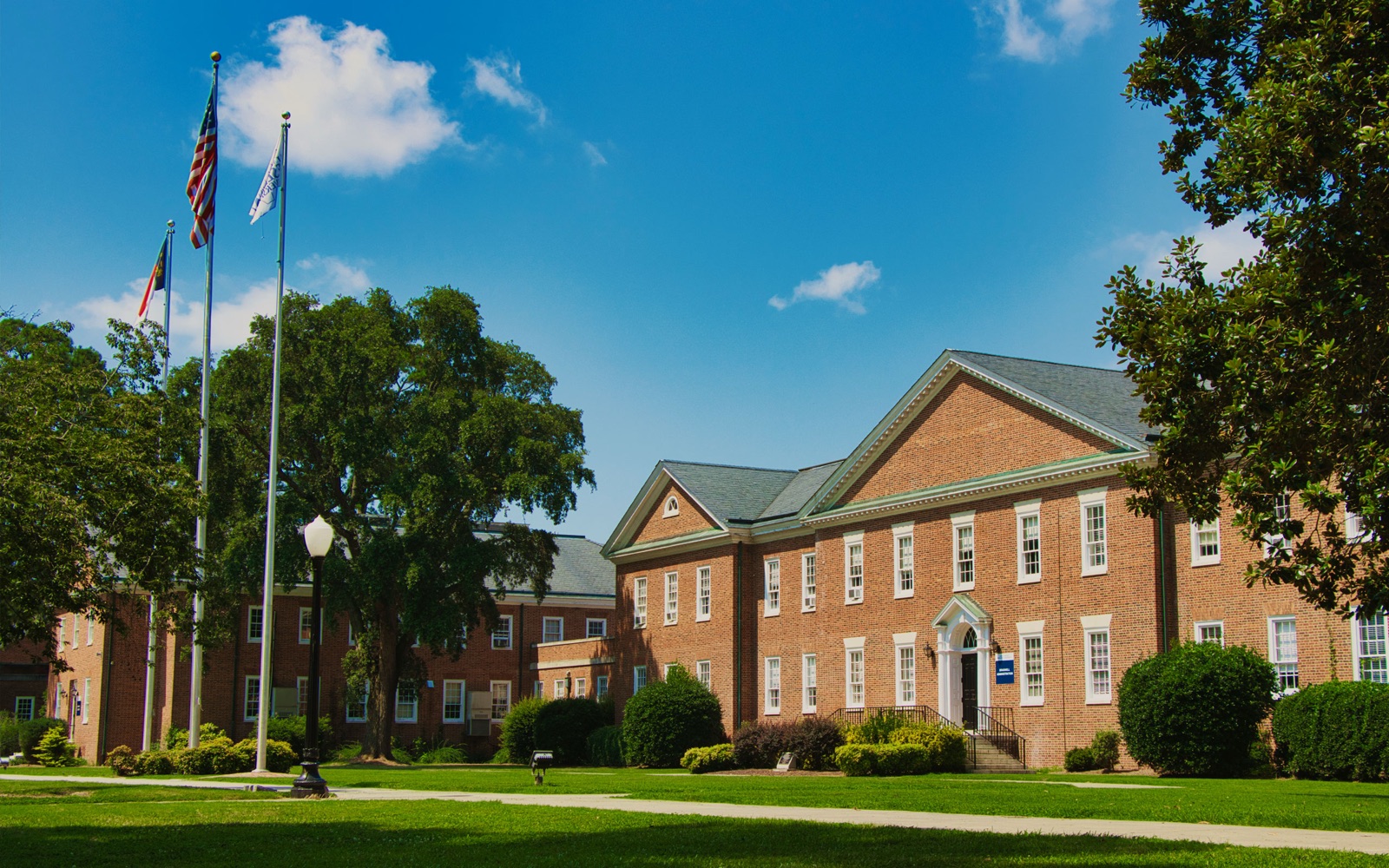
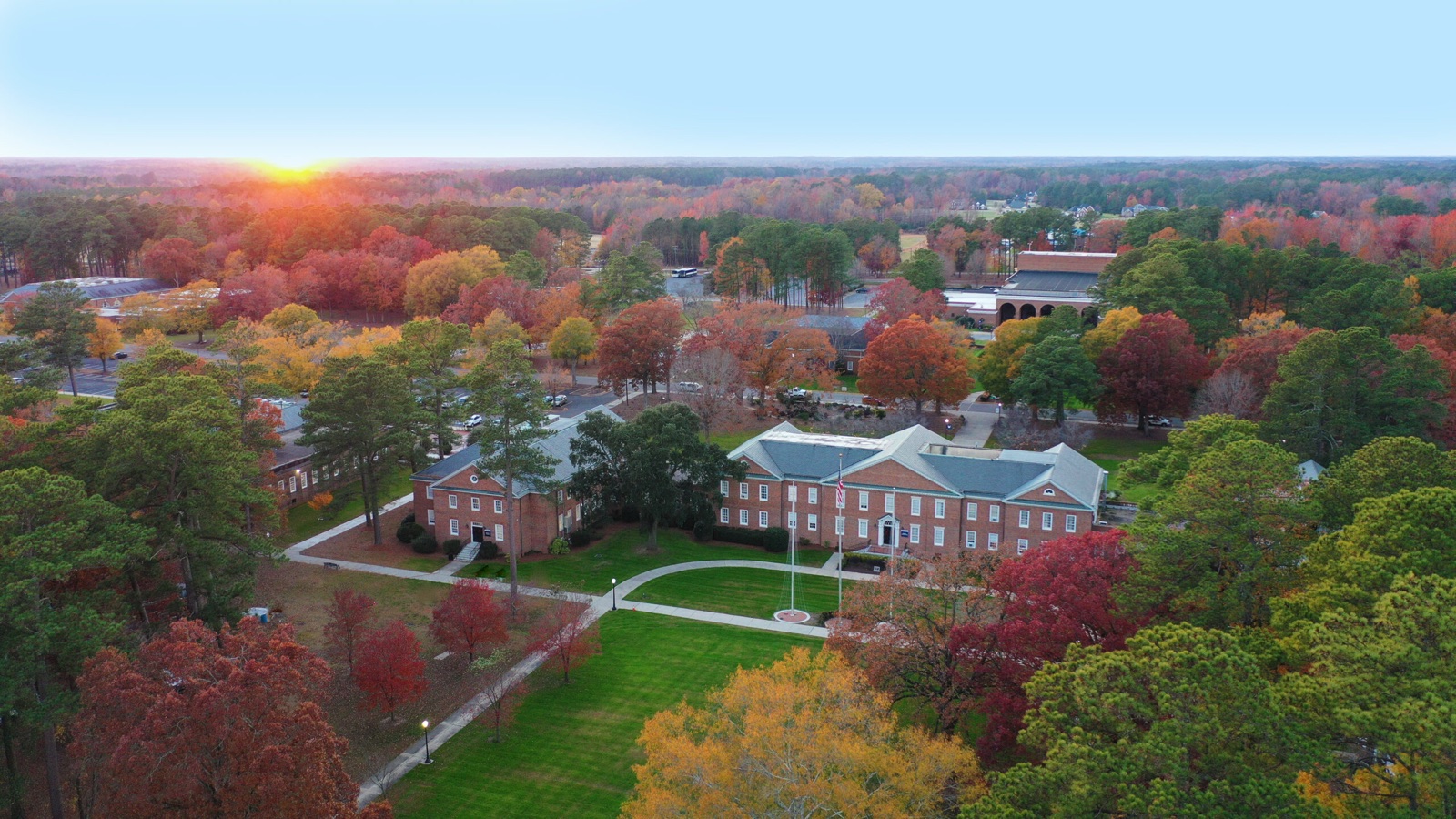
The option he finally chose was North Carolina Wesleyan University, a private university in Rocky Mount, North Carolina, where he received a scholarship and will start his studies in the spring semester of 2027.
“In the end I received a very significant scholarship at North Carolina Wesleyan University, where I'm going to start my studies in Spring 2027 with the Bachelor of Arts in International Studies major.”
origin
Laborde, Córdoba
destination
North Carolina
institution
North Carolina Wesleyan
North Carolina Wesleyan University has more than 1,500 students and a relatively high share of international students for an institution its size. Its published price isn't necessarily lower than that of the public universities Santiago had considered earlier, but private universities can have very different institutional aid policies and use their own scholarships to bring down significantly what each student ends up paying.
That difference explains why the list price doesn't always tell you which option will be cheapest. A private university can publish a higher annual cost and, after awarding institutional aid, end up requiring a smaller family contribution than a public one with lower initial tuition.
The university also publishes an International Award for new international students living on campus. What matters in Santiago's case is that North Carolina Wesleyan's final offer was the one that fit his family's budget best compared with the other universities.
“What made the difference was the financial package: North Carolina Wesleyan had a published cost that was even higher than FIU or UTSA, but I received an academic scholarship of about 30,000 dollars a year, while at FIU the aid was around 8,000 dollars.”
What a US university asks of an international student
North Carolina Wesleyan's international application also shows some of the paperwork that comes up in an undergraduate application from Argentina. It includes official transcripts translated into English and evaluated course by course by a recognized agency, proof of English level and documentation showing the student has the resources needed to fund the first year.
Once those financial requirements are met, the university can issue the I-20 form, which is then used to process international student status in the United States.
In this case, the university doesn't consider SAT or ACT scores for admission, though that doesn't mean standardized exams have stopped being relevant across the whole system. Requirements vary considerably between institutions and some scholarship programs can ask for scores even when the university has a test optional or test blind policy for certain decisions.
It's also worth looking closely at the academic structure. At North Carolina Wesleyan, International Studies sits within Liberal Studies and allows students to combine courses in international relations, comparative politics, anthropology, history and different regions of the world. That flexibility can be useful, but it also makes it important to check which courses will end up on the academic record, especially if a student is considering transferring later on.
The option of transferring
Santiago hasn't ruled out applying again to Florida International University or another university once he's already studying in the United States.
“My goal is to have an excellent first year, get a very high average and then transfer to a university in Florida. My main options are University of Miami (UM) and Florida International University (FIU), which are still part of my academic plan.”
The strategy of starting at North Carolina Wesleyan and then requesting a transfer to a university in Florida has been part of his plan since he had to turn down the other admissions.
At FIU, for example, the requirements change around the threshold of 60 transferable credits. A student trying to transfer after roughly a year of study will probably have close to 30 credits, so some requirements similar to those for a first-year applicant can still apply, while a longer university record changes the way the institution assesses the file.
So if Santiago decides to go ahead with that option, on top of keeping up a good academic record he'll have to check the specific transfer requirements, course equivalences, admission deadlines and funding terms available at that point well in advance.
What he learned from the process
When Santiago talks about his experience so far, what he stresses above all is how much research went into finding an alternative that was financially possible.
“Beyond the universities, what marked me most in this process was learning that a big dream also needs strategy, patience and a lot of persistence. I think we often see the final result, but not all the work behind it.”
In practical terms, his process consisted of researching for several years, identifying a field, talking with his family about a concrete budget, preparing several applications and then comparing the offers not only by the university that sent them, but by the amount the family was left to cover.
The most important part is still ahead: Santiago will start university in Spring 2027 and only then will he be able to assess how the academic experience he chose works in practice. So far, his route mostly serves to show a feature of the US admission process that sometimes stays in the background: being admitted and being able to fund a university are two different decisions, and for an international student the second one can end up defining the first.
“If my experience can help other kids who dream of studying in the United States, I'd feel this whole process made even more sense.”