Stage III · Fund
From Salta to Maryland with Fulbright and university funding: the story of Victoria Contreras del Olmo
Victoria Contreras del Olmo · 1 September 2026
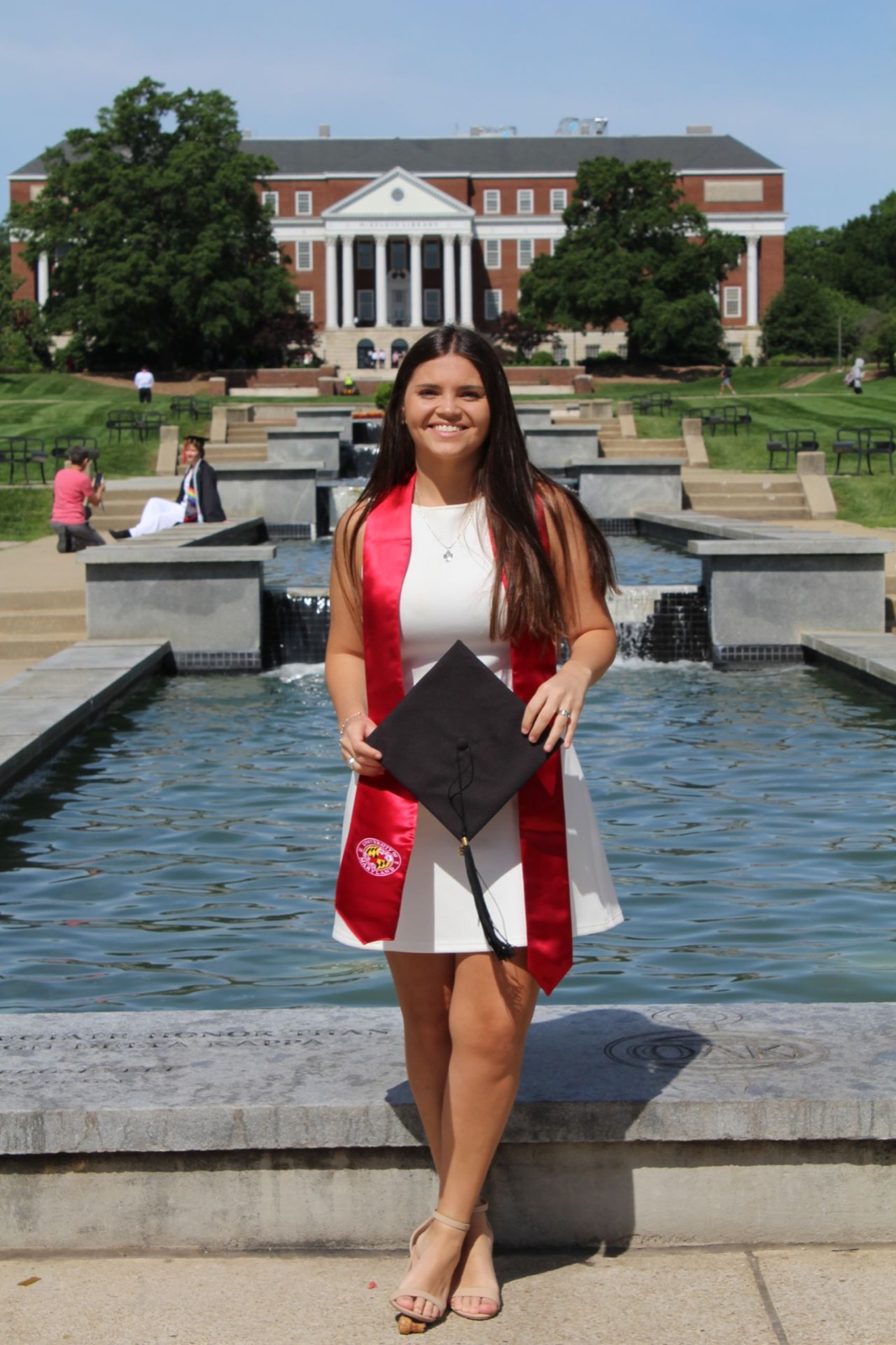
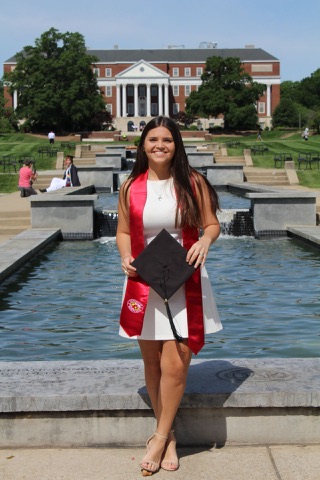
She moved from Salta to Buenos Aires to study International Relations and Political Science at Universidad Torcuato Di Tella and, before she turned 25, had already worked in legislative advising, research and political analysis. In 2022 she won a Fulbright scholarship and the following year began the master's in Public Policy at the University of Maryland, where she combined that support with a scholarship from the university itself that covered 40 of the program's 48 credits. She has already graduated.
Victoria Contreras del Olmo holds a degree in International Relations and Political Science from Universidad Torcuato Di Tella and is a graduate of the master's in Public Policy at the University of Maryland. Before moving to the United States she had built a profile tied to the public sector, research and political analysis, with a particular interest in comparative politics, international relations and electoral processes in Latin America.
From Salta to Buenos Aires
"I'm from Salta. I moved to Buenos Aires to study international relations and political science at Di Tella."
The move meant traveling more than a thousand kilometers to start university and it was also her first experience of living outside her province. At Di Tella she studied international relations and political science and, during and after her degree, she began working in spaces connected to public policy and research.
She worked as a legislative and political adviser, took part as a coordinator and researcher at Instituto IDEAS and volunteered with social organizations. Instituto IDEAS worked through different thematic observatories, among them economic policy, international security, energy, metropolitan policy and new technologies, areas close to several of the topics Victoria had already been following since university.
At the same time she started publishing political analysis. Between 2021 and 2022 she wrote articles in outlets such as El Estadista about electoral processes in Argentina and other countries in the region, including the elections in Colombia and Chile, the use of the concept of populism in public debate and various indicators of democratic decline in the United States.
By the time she started preparing her Fulbright application, at around 23, she already had professional experience in the public sector, work in research and a series of publications on comparative and international politics, a background that later also connected with the concentration she chose during the master's.
Fulbright and the search for universities
Victoria won the Fulbright scholarship in the 2022 call and traveled to the United States in 2023 to begin her graduate studies.
"I won the Fulbright scholarship in 2022 and in 2023 I moved to the United States. In my case I'm studying at the University of Maryland."
The process did not end with the Fulbright selection, because she then had to complete her applications to American universities and compare both the academic programs and the funding terms each institution offered.
She applied to four universities, among them University of California San Diego, George Washington University, Duke University and University of Maryland. She finally chose Maryland, where she also received an institutional scholarship that covered 40 of the 48 credits needed to complete the master's.
"Besides the Fulbright one, the university gave me a tuition scholarship for 40 of the 48 credits."
In her case, the two funding sources did different jobs. The Maryland aid brought the tuition cost down considerably, while Fulbright covered other pieces of studying and living in the United States, such as the stipend, the insurance and the costs tied to the move.
So rather than thinking about a single "full scholarship", her funding was assembled from different sources that complemented each other. This kind of structure is common in graduate study in the United States, where an outside scholarship and aid from the university can be part of the same final package.
The master's in Public Policy at Maryland
Victoria completed the Master of Public Policy at the School of Public Policy of the University of Maryland, a 48-credit program usually finished in two years that combines a required core with different concentration options.
The plan includes courses in policy analysis, governance, quantitative methods, economics, budgeting and applied work, while the rest of the credits are organized around the area each student chooses.
Victoria concentrated in economic policy and international security, a program that combines both areas and that includes courses on micro and macroeconomics, international security, international political economy and the making of U.S. foreign policy, plus electives tied to topics such as programming, international development and budgeting.
"I'm taking courses related to that, like public budgeting, international security, American politics, and it varies each semester."
origin
Salta
destination
Maryland
institution
University of Maryland
The concentration lined up closely with the topics she had worked on and written about in Argentina, but the master's also added more structured training in economics, budgeting, programming and public policy analysis tools.
Studying near Washington
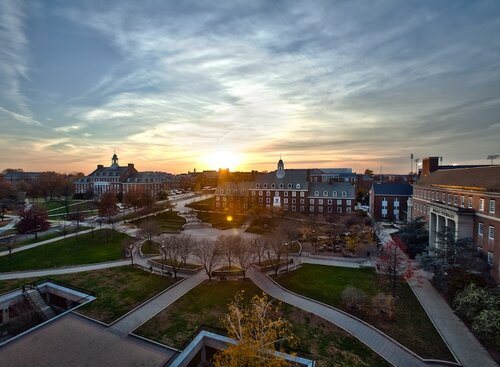
The University of Maryland sits in College Park, about twenty kilometers from Washington, and that proximity matters especially for people concentrating in public policy, international security or foreign affairs.
During the program, students have access to internships and professional activities at public agencies, international organizations, think tanks and consulting firms in the Washington area, something that complements the academic work and that also shapes the kind of students who choose the program.
The campus experience was another factor Victoria weighed when deciding where to study. Unlike a university spread out inside a city, Maryland concentrates much of its academic and social life on a large campus.
"The campus is incredible, I think it was one of the reasons I ended up applying. Walking from one end to the other takes between half an hour and forty minutes. It's enormous and it's the experience you see in the movies: we all go to the football game, to the basketball game, to the stadiums."
Beyond the anecdote, that structure also changes the experience of someone who moves to another country alone, because much of university life, the activities and the relationships between students are concentrated in the same place.
Preparing an application with several funding sources
When Victoria talks about the process, one of the things she stresses most is the need to look for different options at the same time. The Fulbright scholarship solved an important part of her funding, but the Maryland aid was just as relevant in bringing down the total cost of the program.
Her experience shows why it helps to treat the academic applications and the funding applications as related but separate processes. A person can receive an outside scholarship before knowing which university they will attend and, after being admitted, obtain additional aid from the institution.
That also means keeping several applications going at once, with different forms, essays, letters of recommendation and calendars.
"Apply to a lot of scholarships, because they already have the no."
Beyond that line, Victoria also points out that an important part of the process is having people to review materials with, exchange information with and get through the months of waiting between one stage and the next. Preparing an application like this usually includes not only the scholarship form, but also exams, university selection, essays, recommendations and funding decisions that stretch across several months.
A route through politics, research and public policy
The master's at Maryland was a continuation of several interests Victoria had already developed before moving to the United States. Her earlier experience combined political consulting, legislative work, research and writing about regional politics, while the graduate program let her take on more specific public policy analysis tools and go deeper into international security and political economy.
Now that she has graduated, her track record reads less like a change of field than like a gradual specialization within topics she had been working on since her undergraduate degree. From Salta to Buenos Aires and then to Maryland, the changes of place came with different stages of study and professional experience, but they kept a relatively stable focus on politics, the public sector and international affairs.